
HAMLET Project
- Home
- Synergies
- HAMLET

REEVALUATE & HAMLET synergy
Responsible AI, games and reuse-ready cultural heritage
REEVALUATE and HAMLET address complementary stages of digital creative reuse.
REEVALUATE focuses on preparing cultural heritage assets through digitization, contextualization, validation, provenance, rights management and Marketplace access.
HAMLET focuses on how creative professionals can work with generative AI, digital assets and AI-assisted workflows in games, performance and immersive production.
The shared area is the transition from reuse-ready cultural heritage assets to responsible creative and AI-assisted use.
The main overlap lies around cultural heritage reuse, CCIs, responsible AI, provenance, rights clarity, co-design, game development and practical adoption of digital tools by creative actors.
About HAMLET
HAMLET – Human-centred generative AI framework for cultural industries’ digital transition – is a Horizon Europe project developing and validating human-centred generative AI technologies for the cultural and creative industries.
Its work spans game development, dance, theatre and immersive creative experiences, combining AI enablers with co-design, practice-based testing, training, policy and community-building.
HAMLET runs from January 2025 to December 2027.
Synergy at a glance
Main focus
Responsible creative reuse of digitized cultural heritage
Exchange areas
Games, generative AI, provenance, rights, validation, co-design and policy
Collaboration type
Cluster participation, policy exchange, communication and knowledge transfer
Collaboration value
Connecting reuse-ready cultural heritage with responsible AI and creative-industry workflows
Games for Culture Cluster
Connecting REEVALUATE with the games ecosystem
An outcome of the REEVALUATE–HAMLET collaboration was REEVALUATE’s entry into the Games for Culture Cluster (GCC).
HAMLET formally invited REEVALUATE to join the cluster, highlighting the connection between REEVALUATE’s cultural heritage reuse work and the game and wider creative industries.
REEVALUATE accepted the invitation and extended participation to its wider consortium through the GCC mailing list and repository, allowing technical, pilot, policy, dissemination and exploitation partners to follow cluster opportunities directly.
The cluster provides a common environment for:
- policy exchange
- dissemination and joint visibility
- workshops and knowledge-sharing
- game-development contacts
- technical and methodological discussion
From reuse-ready heritage to AI-assisted creation
One of the clearest connections between the two projects is the lifecycle of digital assets.
REEVALUATE works on preparing cultural heritage material so that it can be understood, traced, validated and reused under clear conditions.
HAMLET develops AI-supported tools that operate further downstream in the creative process, including technologies for generating and working with 3D assets, movement, immersive environments and other creative content.
A common reuse pathway can therefore be described as:
Cultural Heritage Asset → Context and Provenance → Rights and Validation → Creative Reuse → AI-Assisted Game or Immersive Workflow
This connection is especially relevant to game development, where usable assets require more than a digital file: they also need technical suitability, licensing clarity, provenance and sufficient contextual information.
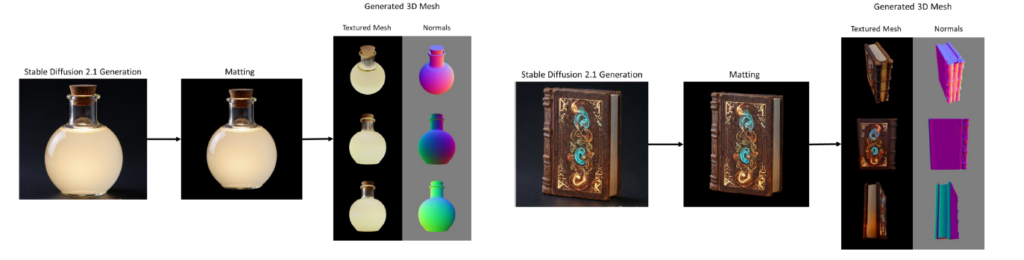
Figure 1: HAMLET’s Generic Procedural Content Generation Enabler explores AI-assisted generation of reusable 3D assets for creative workflows.
Reuse-ready heritage for games
Games provide a practical common ground between REEVALUATE and HAMLET.
REEVALUATE Pilot 1 demonstrates the reuse of digitized fashion heritage in game and creative-production contexts, while HAMLET includes game-development pilots exploring generative AI and human–AI collaboration.
This creates a shared question:
What information does a cultural heritage asset need before it can be responsibly reused in a game or AI-assisted creative workflow?
Relevant requirements include:
- file format and technical quality
- contextual information
- provenance
- licensing and reuse conditions
- attribution requirements
- AI-use permissions
- cultural-sensitivity information
- validation and traceability
Both projects identified this as a common policy direction around reuse-ready cultural heritage assets for responsible game development.
Rights, provenance and responsible reuse
Both projects address the need for digital and AI-assisted creative workflows to remain traceable.
REEVALUATE develops mechanisms for IPR management, provenance, contextualization and validation across the cultural heritage reuse lifecycle.
HAMLET’s responsible-AI work also addresses documentation, creator involvement, transparency, rights and provenance in AI-supported creative production.
The projects identified the comparison of these approaches as a relevant methodological exchange, including the relationship between HAMLET’s responsible-AI documentation and provenance requirements and REEVALUATE’s AI reuse, validation and IPR workflows.
The common principle is that digital cultural heritage should not be considered reusable only because it is technically accessible. Users also need to understand where an asset came from, how it may be used and under what conditions it may be transformed.
Policy exchange through the Games for Culture Cluster (GCC)
The GCC has also provided a policy-facing environment for the collaboration.
REEVALUATE has contributed to Games for Culture discussions on gaming, AI, innovation and policy, including the cluster meeting held in Brussels in June 2026.
Within this environment, REEVALUATE introduced the concept of production-ready heritage assets: digitization policy should also consider whether assets are sufficiently prepared for downstream creative reuse.
This includes:
- technical quality
- context
- provenance
- rights and licensing
- attribution
- traceability
- practical reuse conditions
This complements HAMLET’s policy work on responsible AI adoption by creative professionals.
Communication and mutual visibility
REEVALUATE and HAMLET have also supported each other’s communication and dissemination activities.
This has included:
- newsletter references
- social-media communication
- re-sharing of project developments
- coordinated Games for Culture communication
- promotion of policy, events and cluster activities
Continuing through the HAMLET community
HAMLET continues until the end of 2027, providing a route for selected REEVALUATE results and lessons to remain connected with an active cultural and creative industries community.
The HAMLET Collaborative Community Hub is particularly relevant. It brings together collaborators, project spaces, AI enablers and resources within a shared digital environment.
For REEVALUATE, this provides a possible post-project route for public outputs related to:
- cultural heritage reuse
- Marketplace examples
- responsible AI
- rights and provenance
- policy recommendations
- training and MOOC material
The REEVALUATE team identifies HAMLET’s Community Hub and Virtual Living Lab as potential channels for longer-term knowledge transfer after REEVALUATE ends.
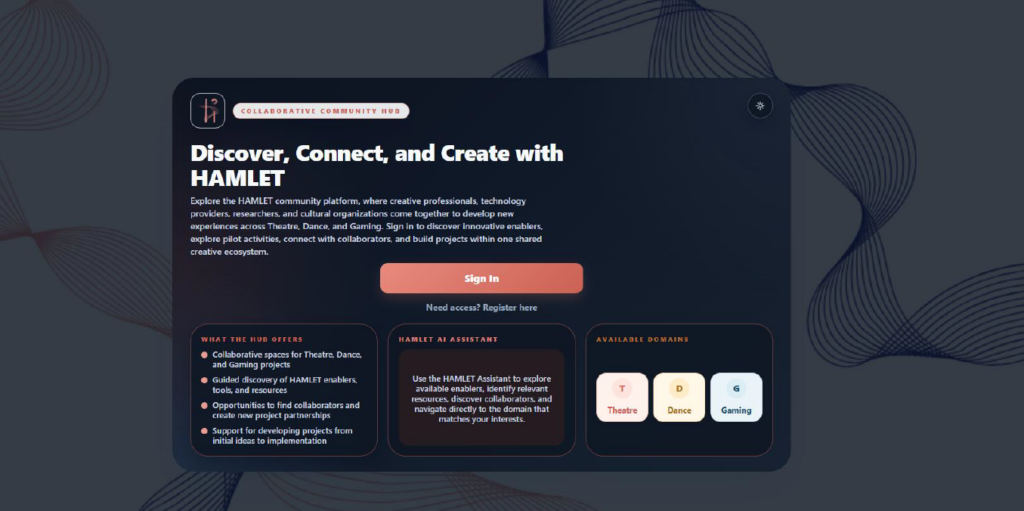
Figure 2: The HAMLET Collaborative Community Hub provides a shared environment for projects, collaborators, AI enablers and resources across the cultural and creative industries.
Next collaboration routes
The next areas being explored focus on making the existing policy and knowledge exchange more operational.
Creative-user feedback
HAMLET and GCC contacts can provide feedback from game developers and creative professionals on what makes a digitized cultural heritage asset practically usable in a creative workflow.
Rights and provenance comparison
HAMLET’s responsible-AI documentation and provenance requirements can be compared with REEVALUATE’s IPR, validation and provenance mechanisms to identify common requirements for responsible reuse.
Reuse-ready heritage for game development
The projects can further develop the shared policy line around preparing digitized cultural heritage for responsible use in games and AI-assisted creative production.
Post-project knowledge transfer
Selected REEVALUATE public outputs can be considered for continued visibility through HAMLET’s Community Hub or Virtual Living Lab after REEVALUATE closes.