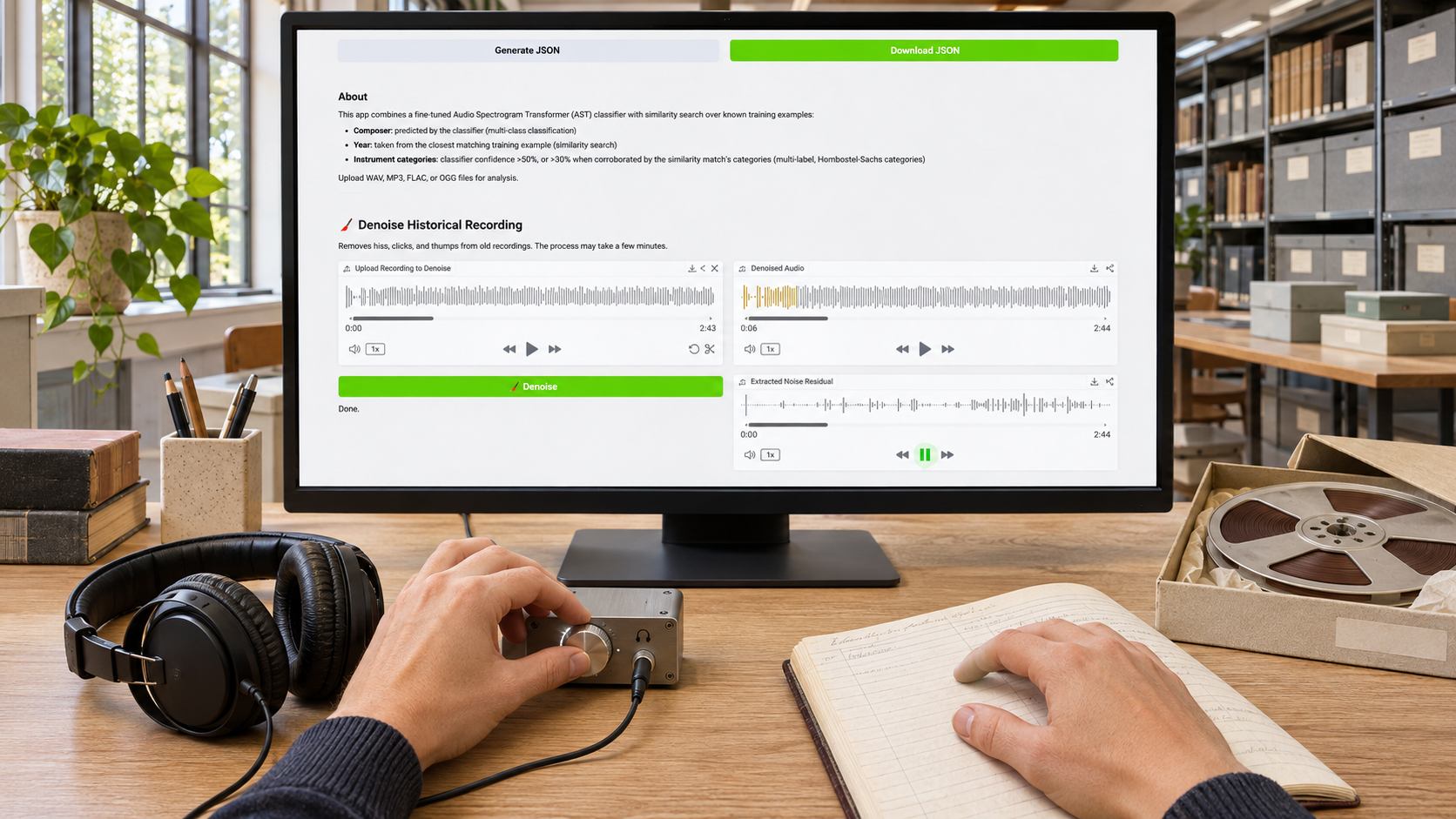
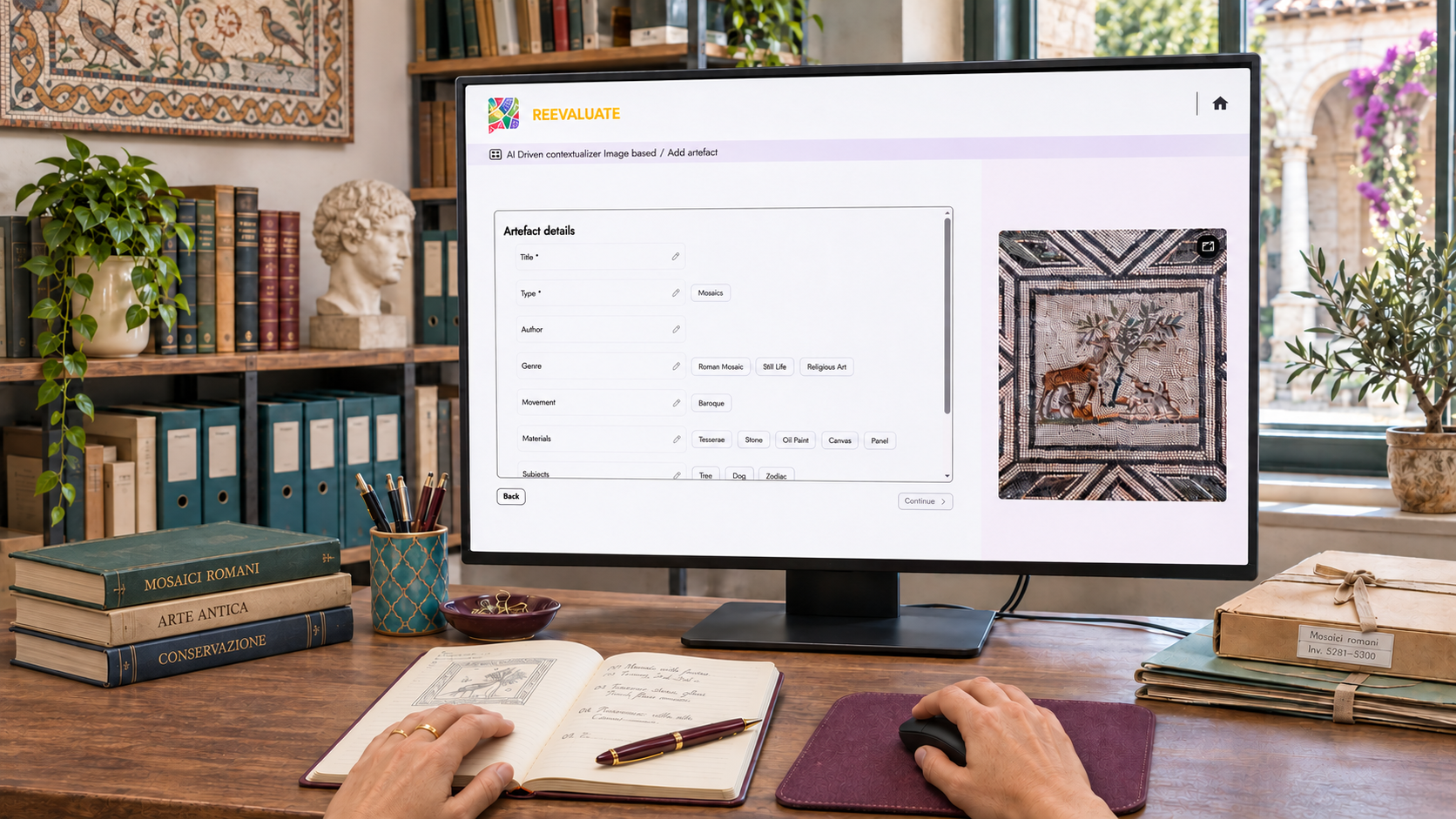
Listen to an old music recording and you may hear a faint hiss beneath the instruments. If you remove the hiss, does a quiet passage become easier to hear? Or does part of the performance disappear with it? The REEVALUATE Audio Contextualization Tool lets listeners explore that question by playing three tracks: the original recording, a cleaned version and the sound the tool removed.
Listen to what changed
In the tutorial, the three tracks appear as waveforms, each with its own playback controls. An archivist can listen to a passage in the original, replay it in the cleaned version and then listen to the extracted sound on its own. That third track makes a difference: it gives the listener a way to check whether the software picked up only clicks and hiss or also caught something worth keeping.
Explore what the music might tell us
The tool also suggests instrument categories, possible composers and a year of composition. Each offers a different starting point for investigating a recording. A suggested instrument can guide a second listen. A composer’s name might prompt a search through a concert programme or a collector’s notes.
The year requires particular care: the tool takes it from the closest matching example in its reference data. A musical resemblance can offer a clue, but it cannot establish when a piece was written or when the performance was recorded. That distinction matters when deciding what belongs in a catalogue and what still needs investigation.
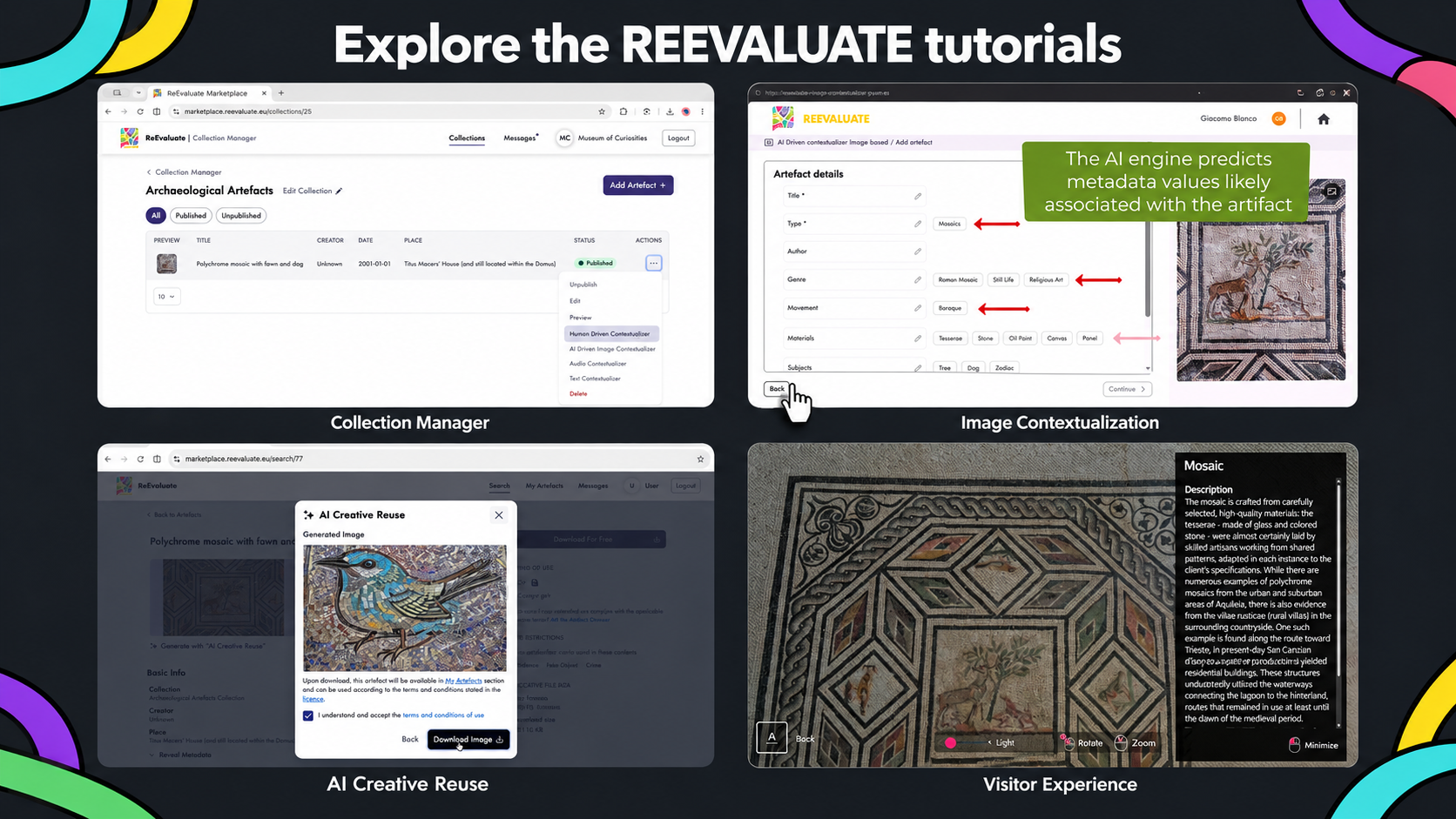
Watch the REEVALUATE Audio Contextualization tutorial to hear the comparison, or explore the full tutorial collection.