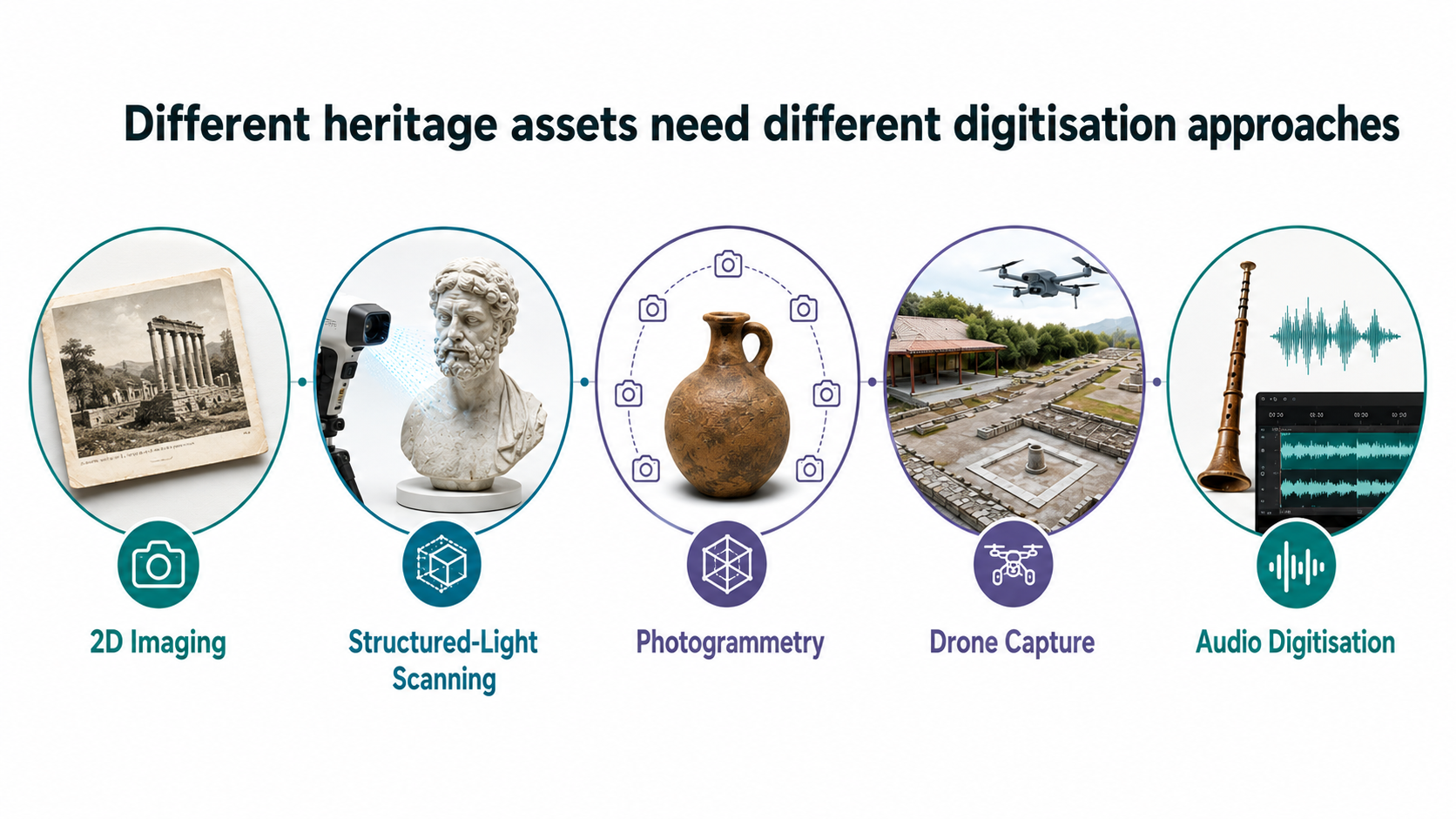
Beyond Digitization – What Makes a Digital Cultural Heritage Asset Reusable?
Creating a digital image, 3D model, audio recording or virtual reconstruction is an important achievement, but it is not the end of the digitization process.
For a digital cultural heritage asset to create lasting value, people must also be able to understand it, discover it, access it and reuse it responsibly.
Across Europe, cultural heritage institutions are investing significant effort in digitizing collections, monuments, archaeological sites, archives and other cultural resources. These activities can protect fragile knowledge, improve remote access and create new opportunities for research, education, tourism and creative production.
However, digitization alone does not guarantee that an asset will remain useful beyond the project or institution that created it.
A file may exist but be difficult to find. A 3D model may look impressive but lack information about its scale, historical meaning or technical characteristics. An image may be publicly visible while its conditions of reuse remain unclear. AI may help generate new descriptions or creative outputs, but users may not know how that information was produced or whether it has been reviewed.
This is the difference between a digitised asset and a reuse-ready asset.
Within REEVALUATE, a reuse-ready cultural heritage asset is not simply a digital file. It is an asset supported by technical quality, structured metadata, cultural context, clear rights, provenance, discoverability, interoperability, accessibility and evidence of the value created through reuse.
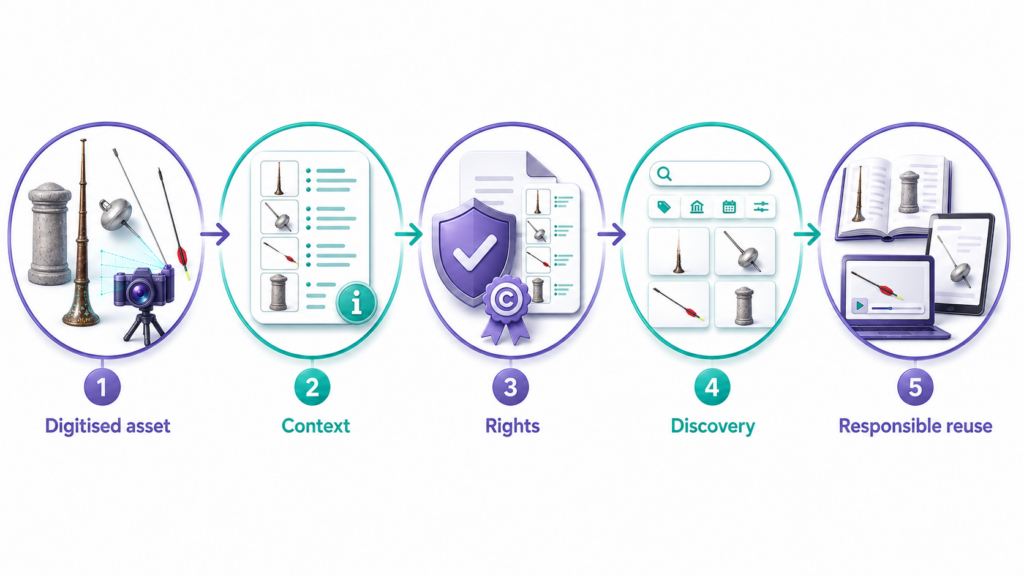
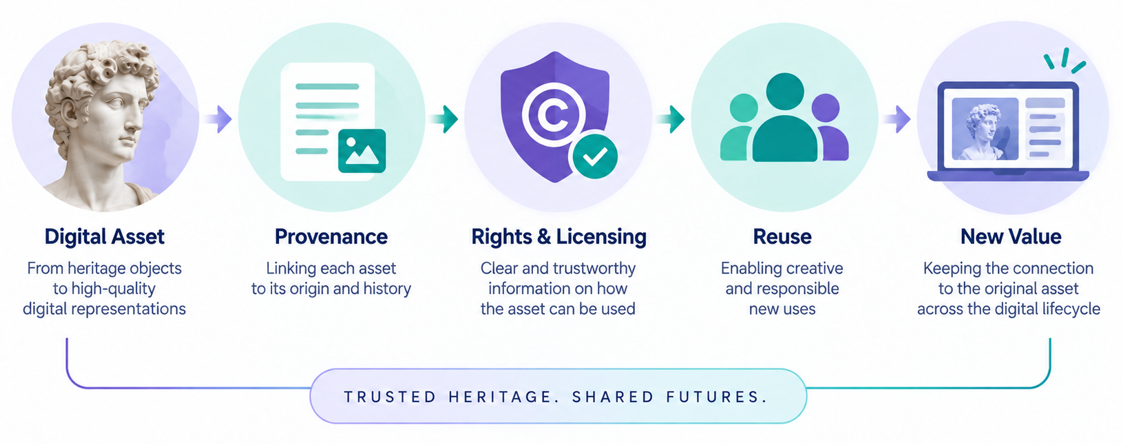
From digitized asset to responsible reuse: the conditions that help cultural heritage remain understandable, discoverable and useful.
A digital file is only the beginning
Digitization begins with the creation of a digital representation of a physical object, collection or heritage environment.
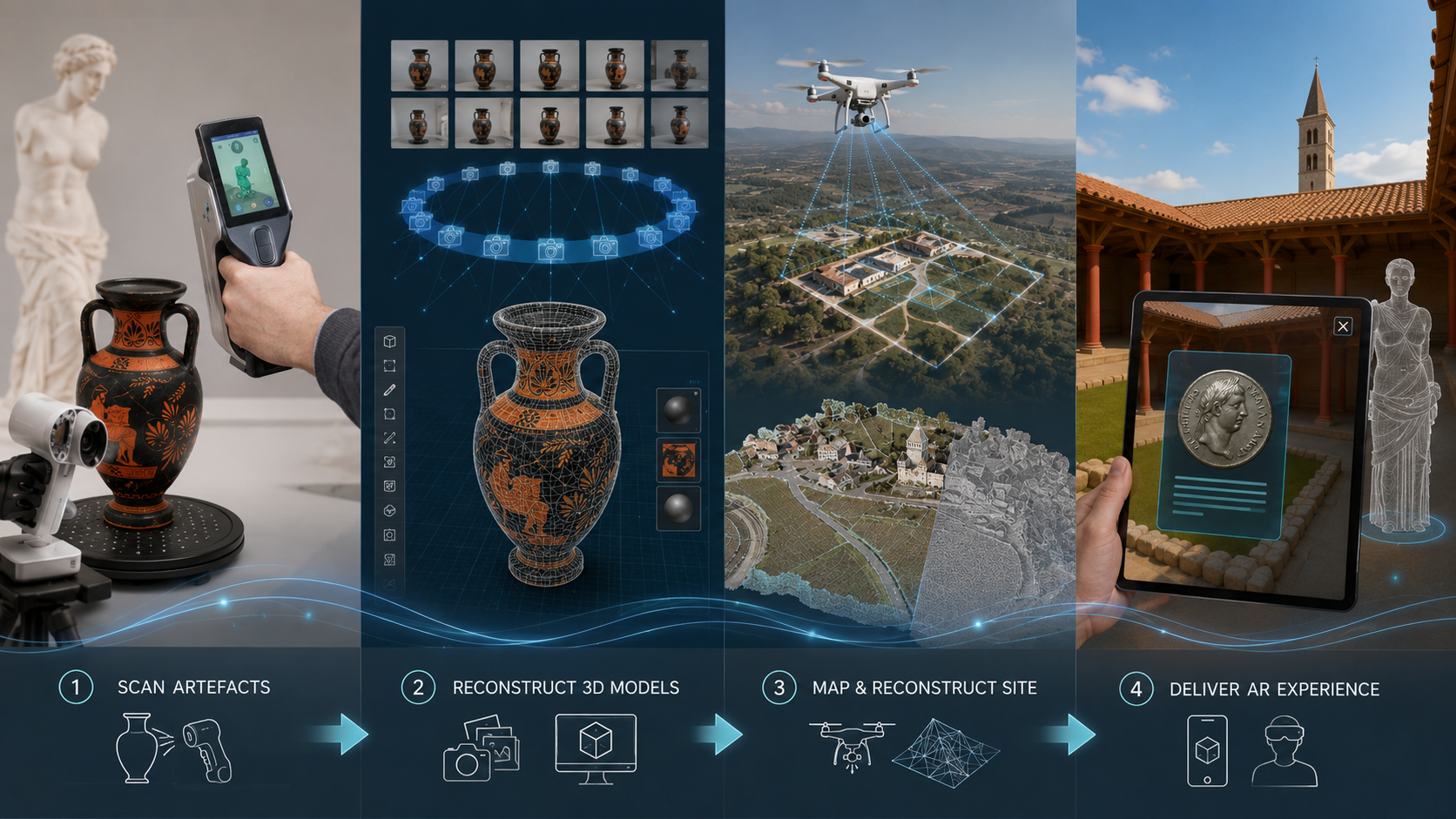
Depending on the material, this may involve photography, scanning, photogrammetry, audio recording, 3D modelling or the preparation of structured digital records. These outputs can support documentation, preservation and access, especially when the original asset is fragile, geographically distant or difficult to display.
But a digital representation does not explain itself.
A 3D model of an archaeological object is far less useful if it has no date, location, scale, description or information about the excavation in which it was found. The same applies to a garment without information about its materials and construction, an archival photograph without its historical setting, or an audio recording without information about the place, performer or practice it documents.
A digital file becomes much more valuable when it is connected to knowledge.
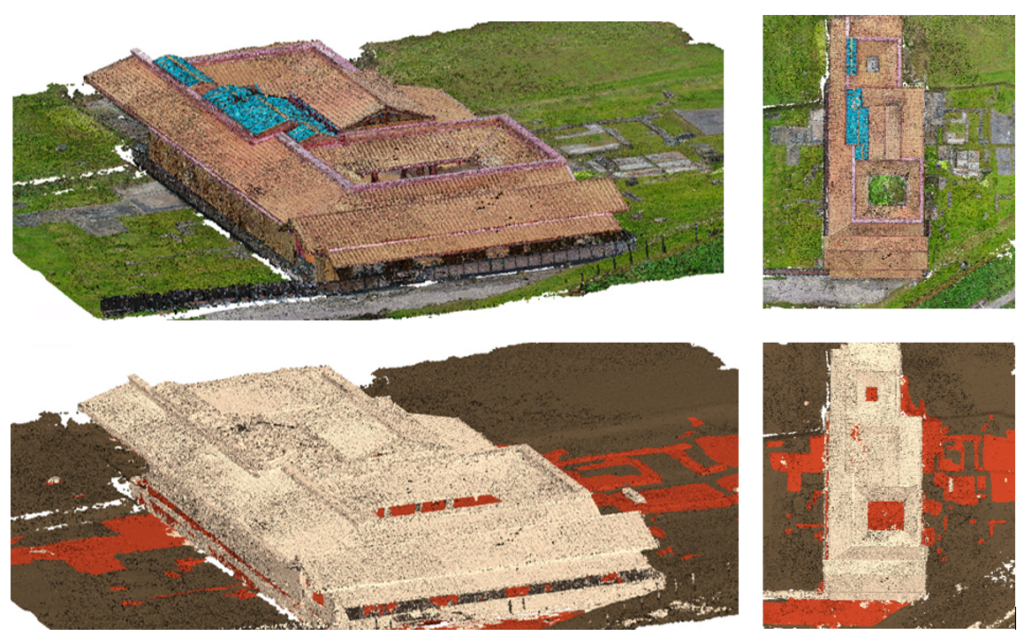
Digitisation can create detailed digital representations of cultural heritage, but further work is needed to make these assets reusable.
Context turns a file into cultural heritage information
Context helps users understand what an asset represents and why it matters.
This may include:
- the object’s name and type;
- its creator, origin or associated institution;
- its historical period and location;
- materials, dimensions and production techniques;
- related people, events, traditions or collections;
- curatorial interpretation and scholarly references;
- cultural sensitivities or restrictions.
REEVALUATE supports the enrichment of digital artefacts through both visual and textual information. AI can help suggest metadata, identify possible relationships and structure information, while curators and other cultural heritage professionals can review, correct and expand the results.
That human role remains essential. An AI system may recognise a sculpture, garment or building, but it may not understand its institutional history, symbolic meaning or relationship to a particular community.
The strongest approach is not to replace expertise, but to combine automation with professional judgement.
Structured metadata makes information usable
Adding information is not enough if every institution describes assets differently.
Structured metadata allows information to be interpreted consistently by both people and digital systems. When dates, licences, locations, object types and institutional information are stored in predictable fields, users can search and filter collections more effectively and platforms can exchange data more reliably.
REEVALUATE also connects cultural heritage information through a Knowledge Graph. Instead of treating each artefact as an isolated record, this approach represents relationships among artefacts, people, institutions, places, periods and concepts.
This can help users discover connections that would otherwise remain hidden. A search may begin with one object and lead to other artefacts linked by a shared location, material, creator, historical period or theme.
Structured metadata therefore does more than improve cataloguing. It helps transform separate digital records into a connected knowledge environment.
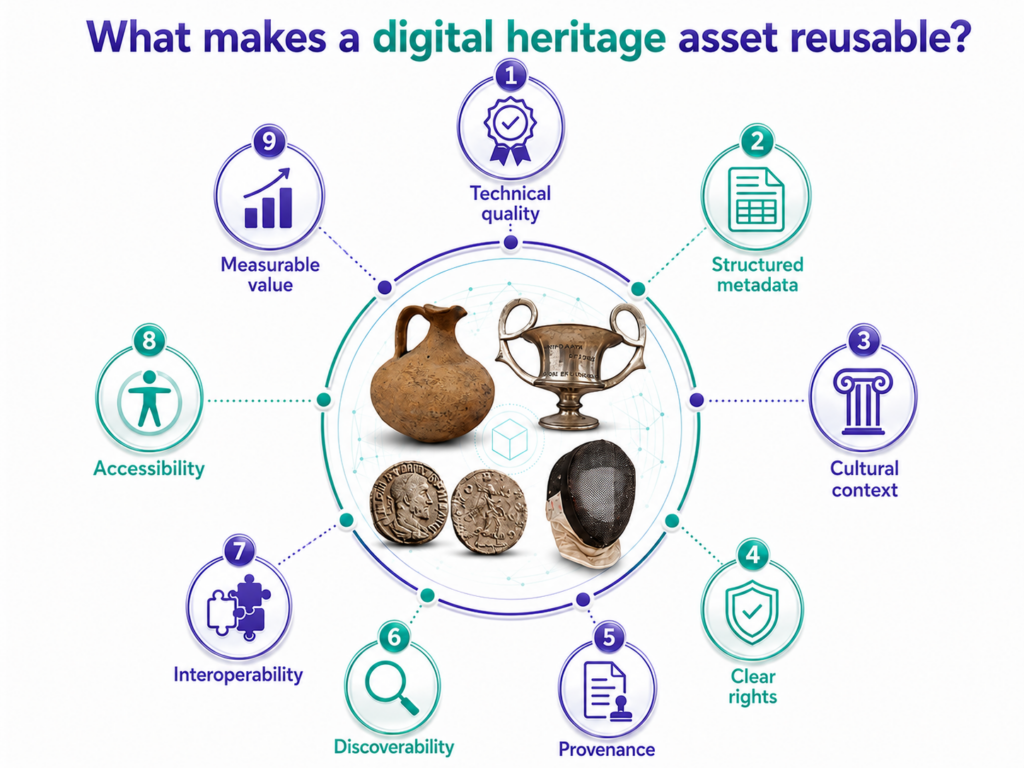
A reusable digital heritage asset needs more than a file. It also requires quality, context, rights clarity, provenance, accessibility and routes to discovery.
Reuse depends on discoverability
Even a technically excellent and richly contextualized asset creates little value if potential users cannot find it.
Traditional collection databases often assume that users already know an institution’s terminology, classification system or exact object title. Creative professionals, educators and members of the public may search differently. They may describe an object’s appearance, atmosphere, period or intended use rather than use formal catalogue language.
The REEVALUATE Marketplace is designed to support several routes to discovery. Users can search through text, upload an image to retrieve visually similar artefacts and explore recommended results.
This means that someone looking for historical fashion inspiration, for example, would not necessarily need to know an object’s exact title or collection number. They could describe a style, upload a similar image or explore related objects.
Supporting different forms of search makes cultural heritage collections easier to use beyond specialist cataloguing environments.
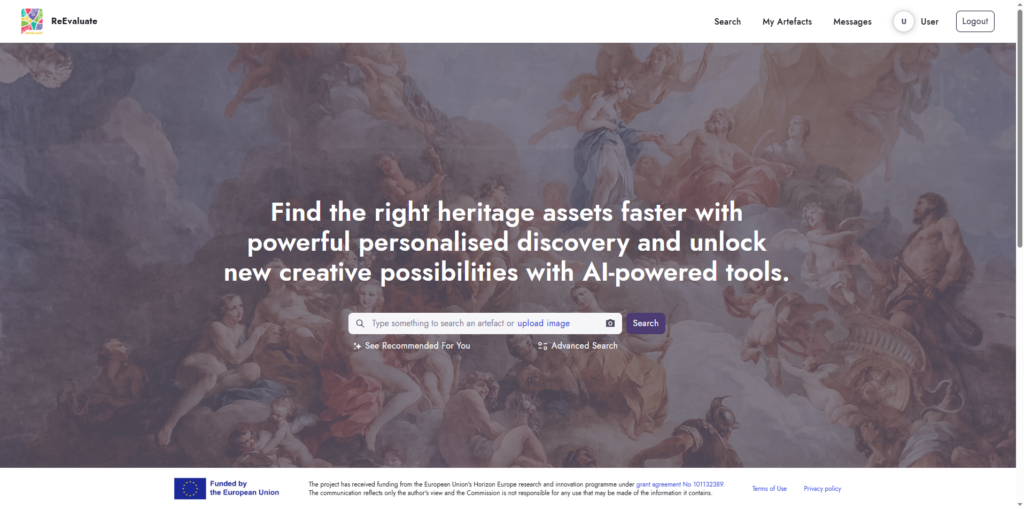
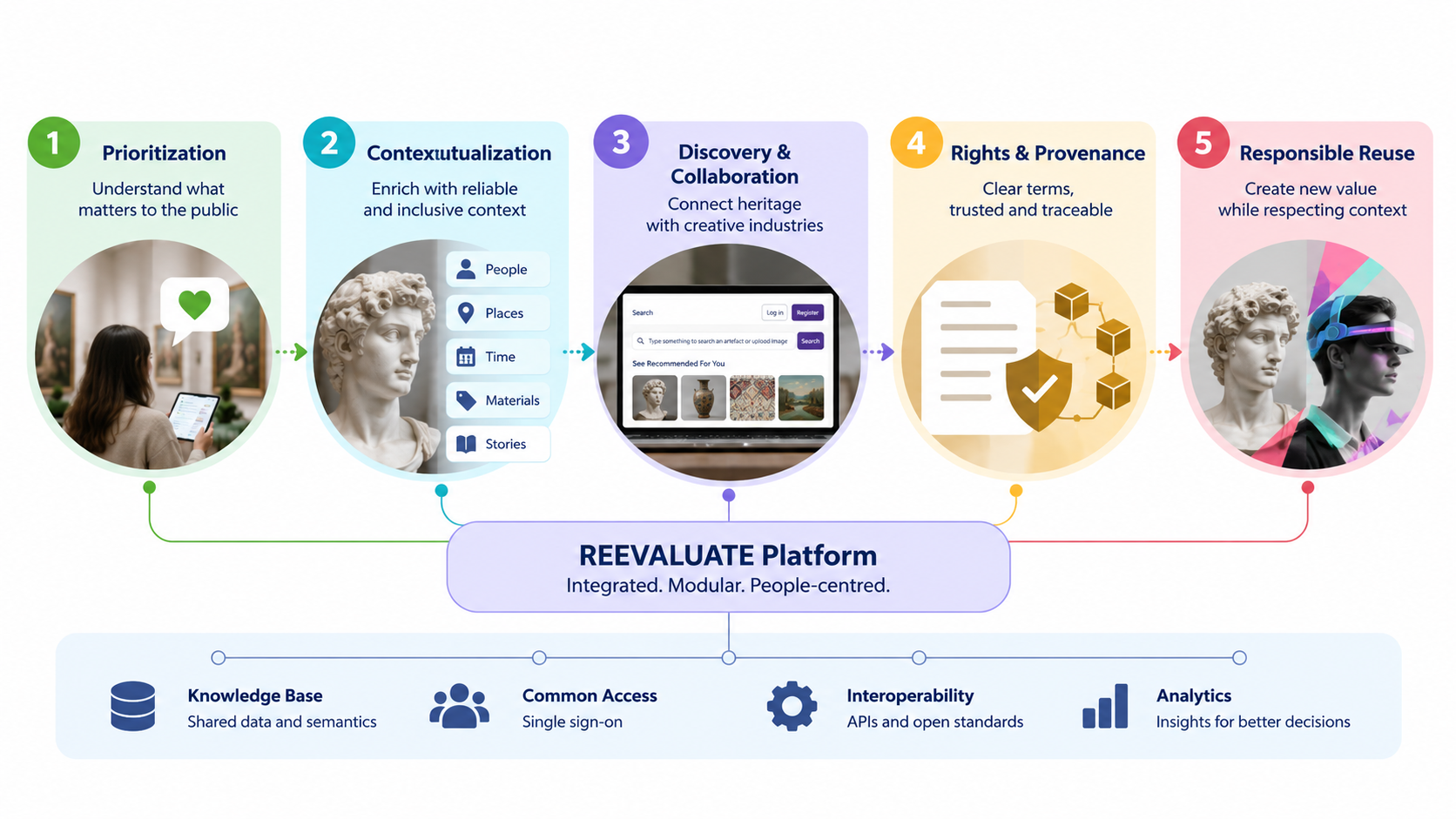
The REEVALUATE Marketplace supports text and image-based discovery of digital cultural heritage assets.
Clear rights reduce uncertainty
One of the main barriers to cultural heritage reuse is uncertainty about what users are allowed to do.
Being able to view an asset online does not automatically mean that it can be downloaded, modified, used in a publication, included in an educational resource or integrated into a commercial product.
A reuse-ready asset should therefore make clear:
- who owns or manages it;
- whether copyright or other rights apply;
- which licence governs access and reuse;
- whether attribution is required;
- whether commercial use or modification is permitted;
- whether cultural or contextual restrictions apply;
- whether access is free, paid or time-limited;
- who should be contacted for clarification.
REEVALUATE integrates rights management into the Marketplace workflow. Cultural heritage institutions can define access and licensing conditions when publishing an artefact, while users can communicate with the institution where further clarification is needed.
This is important because responsible reuse should not require institutions to lose oversight of how their collections are presented or used.
Provenance creates trust
Provenance answers a basic question:
Where did this information or digital output come from?
For a digitized object, provenance may include the source institution, the original physical artefact, the digitization process, the person or system that created the record and any later changes made to it.
When AI is involved, provenance becomes even more important. Users may need to know whether metadata was entered by a curator or suggested by an AI system, whether an AI-generated description was reviewed, and which original asset was used to produce a new output.
Traceability helps users evaluate reliability, supports correct attribution and allows institutions to maintain a clear connection between original assets and later interpretations or reuses.
Validation supports responsible reuse
Reuse-readiness is not only about making assets technically available. It is also about ensuring that reuse remains appropriate to the context in which an institution has published them.
Cultural heritage collections may include sacred objects, human remains, conflict-related material, sensitive histories or representations that require particular care. Even apparently neutral artefacts may be reused in ways that distort or trivialise their meaning.
REEVALUATE’s validation approach is intended to help institutions define restrictions and review potentially problematic outputs. Automated checks can provide an additional layer of control, but they cannot replace curatorial judgement or dialogue with the communities connected to the material.
The combination of documented conditions, automated support and human oversight helps move reuse beyond a simple download process and towards a more responsible relationship between institutions and users.
Technical quality must match the intended use
Different forms of reuse require different technical characteristics.
An image suitable for a website preview may not be suitable for print. A highly detailed 3D model created for documentation may be too large for a mobile application or game. An audio file may require a specific format before it can be used in an immersive environment.
A reuse-ready asset should therefore provide enough technical information for a user to judge whether it fits the intended workflow. This may include file format, resolution, scale, level of detail, compatibility, available versions and conditions for conversion or modification.
This matters especially for creative SMEs, game developers, designers, educators and XR producers, who often work with specific production pipelines.
Cultural heritage institutions understand the meaning and stewardship requirements of their collections. Creative and technical users understand what is needed for practical integration. Bringing both perspectives together helps make digitisation more useful.
Accessibility and interoperability support long-term value
Reuse should not be understood only in commercial terms.
Digital heritage assets can also support education, academic research, museum interpretation, tourism, community engagement and cultural storytelling.
For this reason, reuse-readiness should include accessibility. Interfaces, descriptions and digital experiences should be usable by people with different abilities, levels of expertise and technological resources.
Interoperability is equally important. Assets and metadata should not remain locked within one platform, project or proprietary system. Where possible, they should be structured so that they can connect with institutional systems, other repositories and wider European cultural heritage infrastructures.
Open standards, structured metadata, persistent identifiers and clear governance can help ensure that digital cultural heritage remains usable after the original project ends.
Reuse should create measurable value
Digitization is often measured through numbers: assets scanned, records uploaded, views or downloads.
These indicators are useful, but they do not show what happened next.
A reuse-ready approach asks broader questions:
- Was the asset discovered by relevant users?
- Was it reused in research, education or creative production?
- Were rights and attribution conditions respected?
- Did the reuse create new knowledge or interpretation?
- Did it improve access for new audiences?
- Did it create cultural, social, institutional or economic value?
REEVALUATE’s reuse logic connects several stages: asset creation, enrichment, rights management, discovery, reuse and impact.
The aim is not simply to create more digital files, but to build the conditions under which cultural heritage can circulate responsibly and continue generating meaning.
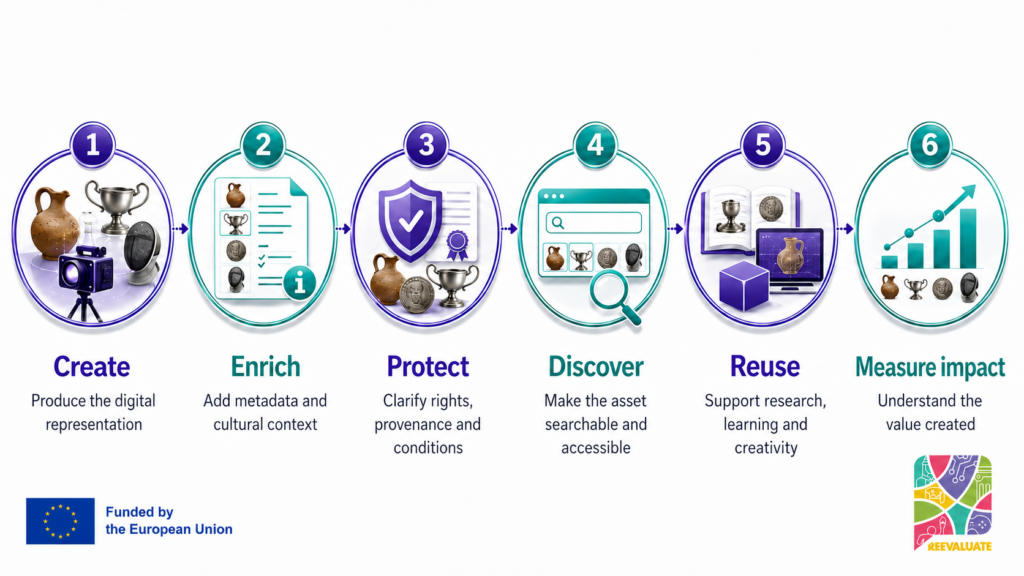
From digitized heritage to living digital resources
Digitization remains an essential foundation for preserving and opening access to Europe’s cultural heritage. But producing the digital representation is only the first step.
For an asset to remain meaningful, it needs context. To be found, it needs structured metadata and effective discovery tools. To be reused with confidence, it needs clear rights and provenance. To remain responsible, it needs validation and institutional oversight. To create lasting value, it must be accessible, interoperable and connected to real user needs.
A reusable digital heritage asset is therefore not simply a file waiting to be downloaded.
It is a contextualised, discoverable and governed cultural resource—prepared to support research, learning, interpretation and creativity while maintaining a clear connection to the institution, community and history from which it originates.
This is the shift REEVALUATE is working to support: moving beyond digitization towards digital cultural heritage that remains understandable, trustworthy and reusable over time.
REEVALUATE has received funding from the European Union’s Horizon Europe Research and Innovation Programme under Grant Agreement No. 101132389.