Before someone discovers an object: organising a digital heritage collection
A visitor exploring a digital collection sees images, titles and descriptions. Behind that experience sits a series of smaller decisions: which objects belong together, how they should be named, what information accompanies them and when their records are ready to become visible.
These decisions shape the first encounter with a collection. An image may attract attention, but its record helps someone understand what they are looking at. A collection title may encourage exploration, while its description explains what connects the objects within it.
The REEVALUATE Marketplace Collection Manager tutorial makes this preparation visible. It follows the creation of a collection, the addition of an artefact and the management options available once that record has been created.
Start with what brings the objects together
In the demonstration, a new collection begins with three elements: a title, a cover image and a short description.
Each has a different purpose. The title identifies the collection. The cover offers a visual introduction. The description explains its scope.
Together, they provide an opportunity to answer a useful question: what should someone understand before opening the first object?
A collection might bring together material from a particular place, objects of a similar type or items selected around a shared theme. Making that organising idea explicit helps readers approach the collection with clearer expectations.
The demonstration uses the title “Archaeological Artefacts”. In an institution’s own collection, the accompanying description could give a more precise sense of the material represented, where it comes from and why it has been grouped together.
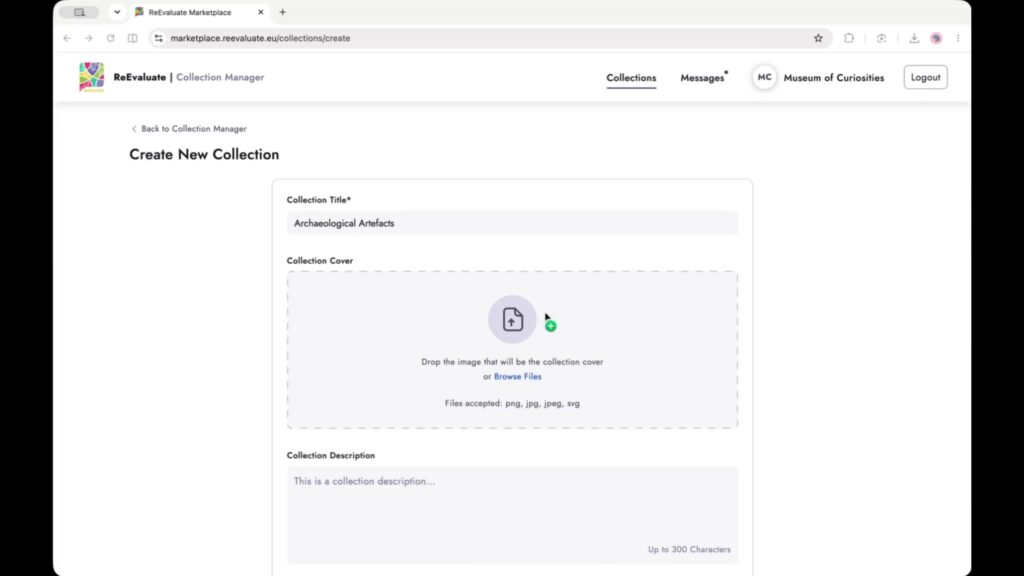
Figure 1. Giving a collection its identity: the title, cover image and description fields in the REEVALUATE Collection Manager. Source: Marketplace Collection Manager tutorial.
Give each object a record of its own
The collection provides the wider frame, but individual artefacts still need their own descriptions.
The tutorial’s “Add Artefact” form includes fields for information such as title, creator, date, place, holding institution, medium, measurements, provenance and description. The user also selects the collection and uploads the associated digital material.
These fields encourage attention to different aspects of an object. Its title identifies it; its place and provenance help situate it; its medium and measurements describe characteristics that an image alone may not communicate.
Completing a record also requires judgement. Information may be incomplete, and a field should not become an invitation to guess. The demonstration, for example, records the creator as “Unknown”.
For collection teams, this makes preparation an opportunity to distinguish what is documented from what still needs investigation. A useful record can acknowledge a gap while preserving the information that is available.
Publication is a decision within the workflow
Uploading material and deciding that it is ready for others to encounter are separate steps.
The demonstration shows options to save an artefact as a draft or publish it. Within the collection view, filters distinguish published and unpublished records. Each record also has an actions menu with options including editing, previewing and unpublishing.
This gives collection management an ongoing role. A record can be revisited when a description needs clarification, new information becomes available or its presentation needs attention.
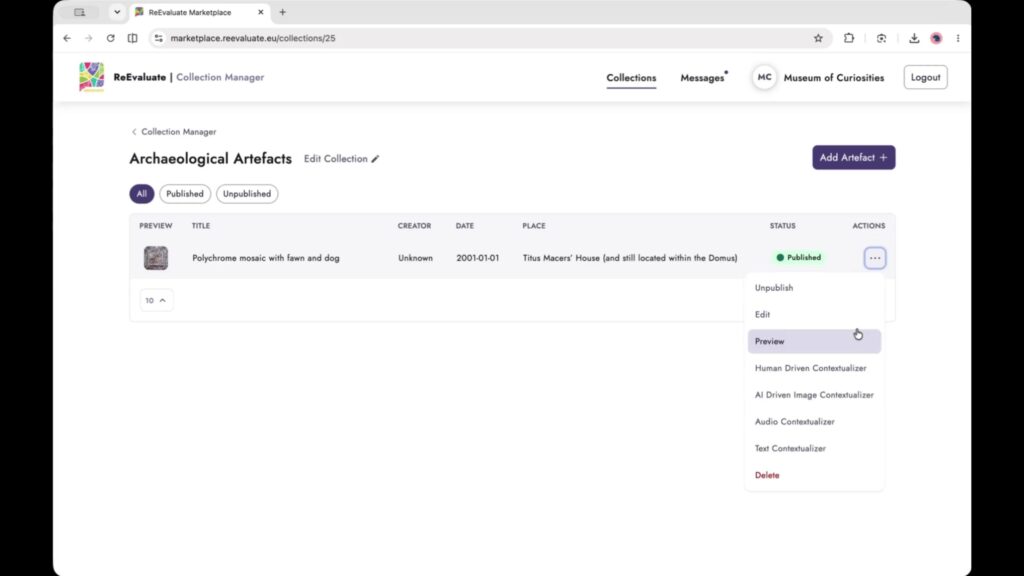
Figure 2. Keeping track of individual records: the collection view displays artefact details, publication status and available management actions. Source: Marketplace Collection Manager tutorial.
A short review before sharing
The demonstration suggests a practical moment for review before publication. A collection team could ask:
- Does the collection description explain what connects its contents?
- Can someone unfamiliar with the object understand its title and description?
- Does the uploaded file correspond to the record being described?
- Are uncertain or missing details represented honestly?
These are suggested editorial checks, rather than an automated assessment performed by the tool. Their value lies in considering the record from the perspective of someone encountering it for the first time.
A colleague familiar with a collection may recognise an object immediately. A researcher, educator or designer approaching it from outside the institution may need more explanation.
The Collection Manager demonstration brings attention to this less visible work. Before an object can become part of someone else’s research, learning or creative exploration, it needs an intelligible place within the collection and a record that helps others approach it.
Watch the Marketplace Collection Manager tutorial to follow the demonstration, or explore the full REEVALUATE tutorial collection.
REEVALUATE has received funding from the European Union’s Horizon Europe Research and Innovation Programme under Grant Agreement No. 101132389.