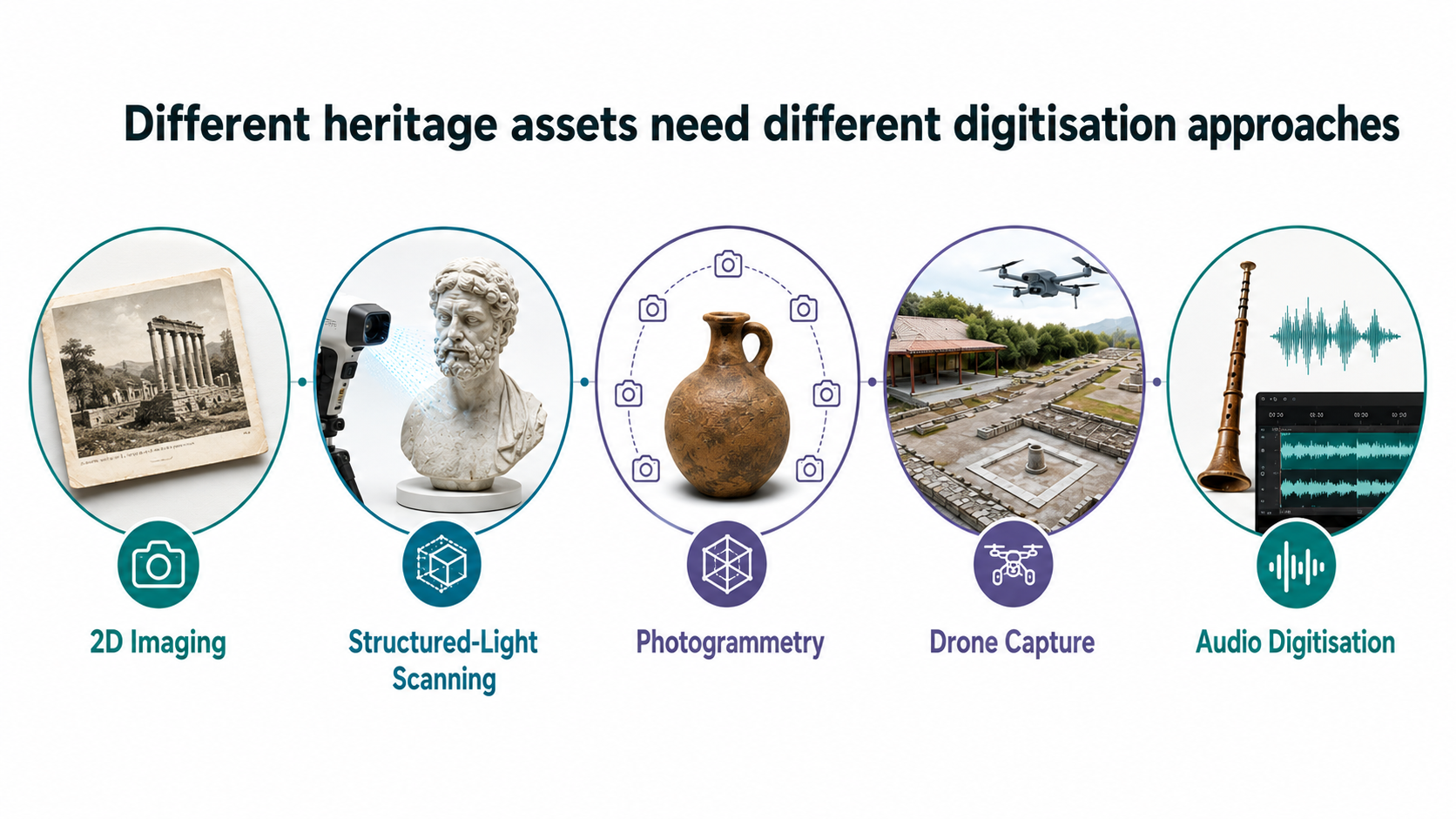
REEVALUATE contributes to the European dialogue on digital cultural heritage at the “From 3D Data to XR Experiences” Forum
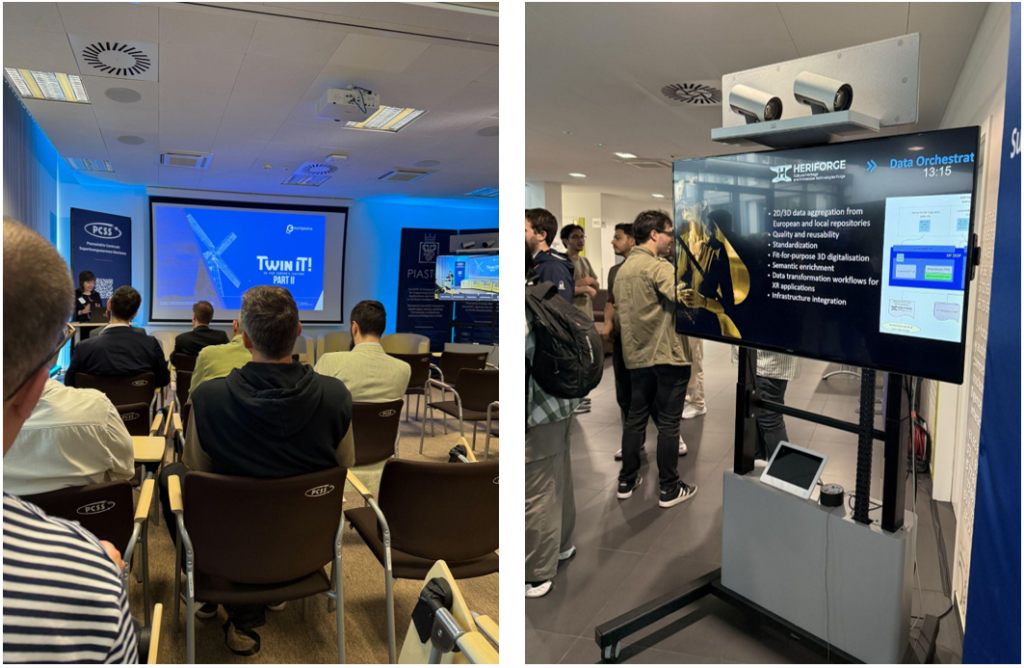
REEVALUATE participated in the European forum “From 3D Data to XR Experiences” in Poznań, joining researchers, cultural heritage professionals, technology developers and policymakers in discussions about the technologies and collaborative ecosystems shaping the future of digital cultural heritage.
On 1 July 2026, the REEVALUATE project participated in “From 3D Data to XR Experiences: Forum on the Future of Cultural Heritage Technologies”, held at the Poznań Supercomputing and Networking Center in Poland.
The forum was organized as the final showcase event of the 3DBigDataSpace project, in collaboration with XRculture and 3D-4CH – Online Competence Centre in 3D for Cultural Heritage. It created a meeting point for representatives of the European cultural heritage, research and technology communities to exchange experiences and reflect on the opportunities and challenges influencing the sector’s digital transformation.
Exploring the technologies shaping digital cultural heritage
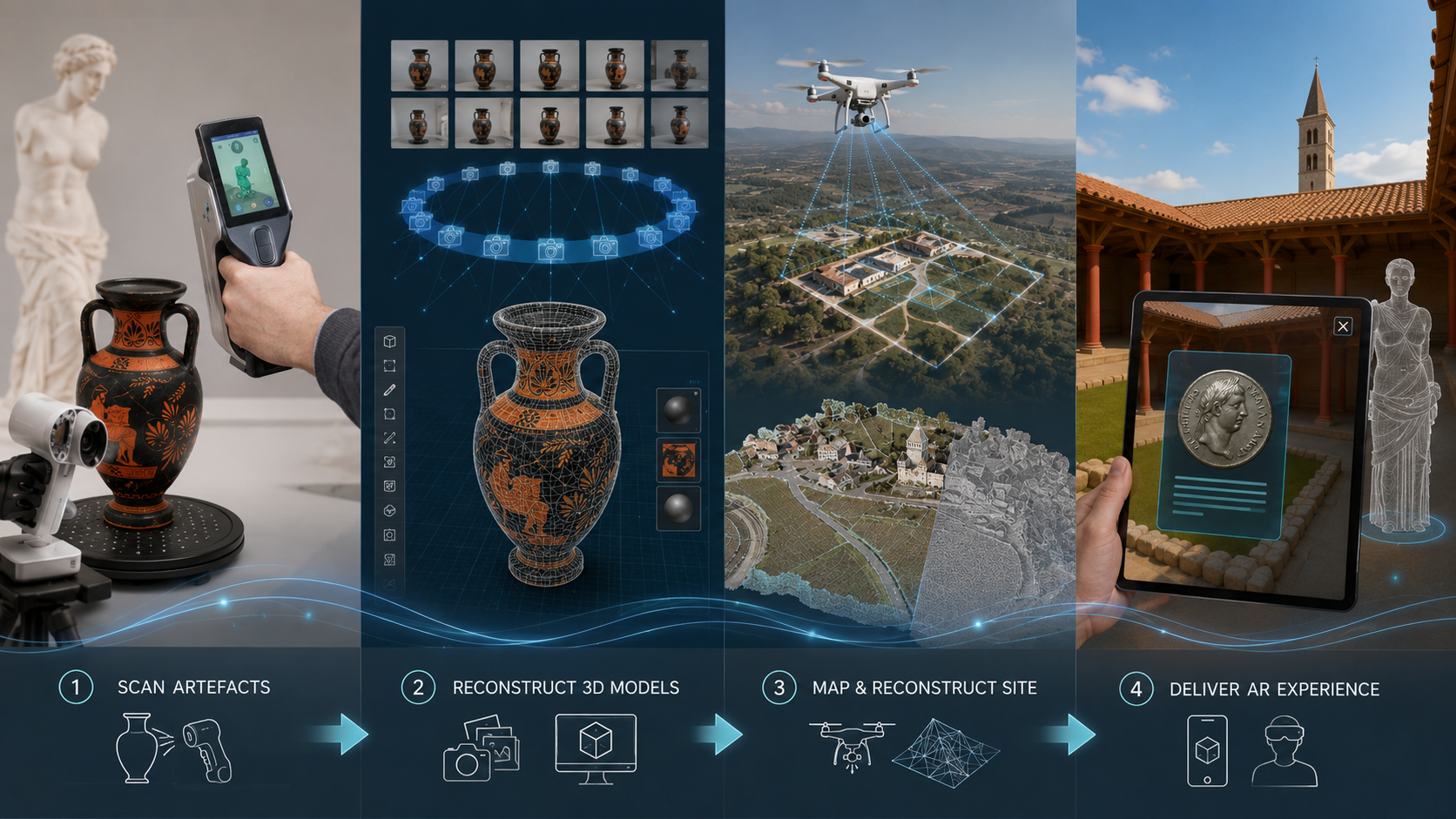
Throughout the forum, participants discussed current developments and future directions in the use of digital technologies for cultural heritage. The programme addressed areas including 3D digitisation, artificial intelligence, extended reality and the Common European Data Space for Cultural Heritage.
These technologies are opening new possibilities for documenting, studying, presenting and reusing cultural heritage assets. At the same time, their effective adoption requires more than the development of individual tools. Cultural heritage institutions must also consider how digital assets are structured, managed, connected and preserved so that they can remain useful over time.
The discussions extended beyond how cultural heritage can be digitized more effectively. They also examined how digital collections can remain accessible, interoperable and reusable, allowing them to continue generating value for cultural institutions, researchers, creative professionals and wider society.
Presenting REEVALUATE through a dedicated showcase
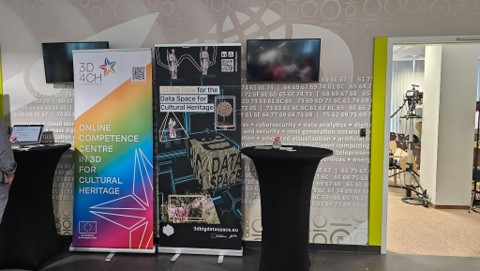
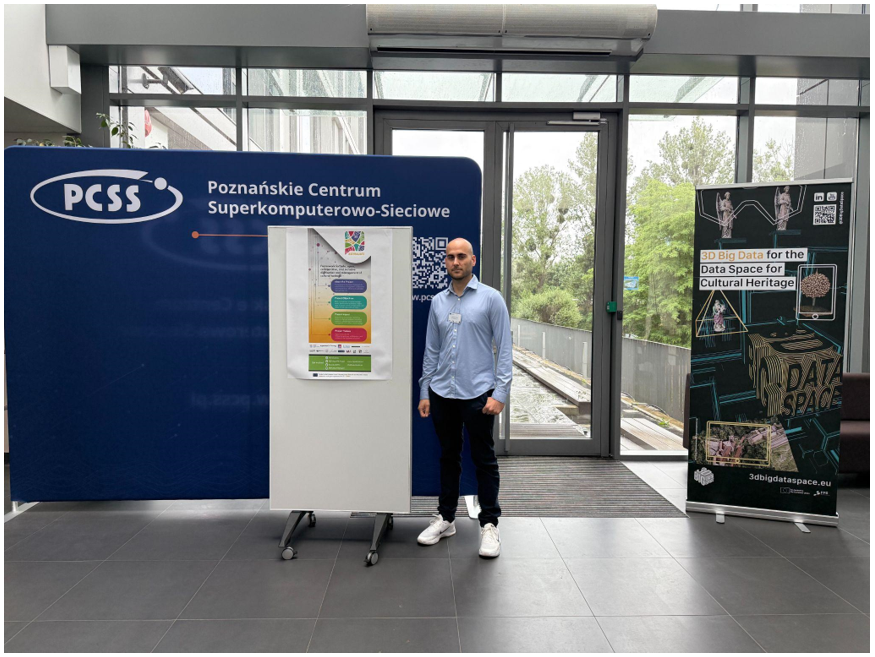
REEVALUATE’s participation included a dedicated showcase curated by project partner 3D Research.
The exhibition area offered an opportunity to introduce the project and its broader approach to the digitisation and management of cultural heritage. It also became a space for exchanges with researchers, heritage professionals, technology developers and representatives of other European initiatives.
These discussions enabled participants to compare experiences, identify shared challenges and explore possible areas of future cooperation. They also reinforced the value of connecting projects that approach cultural heritage digitisation from different but complementary perspectives.
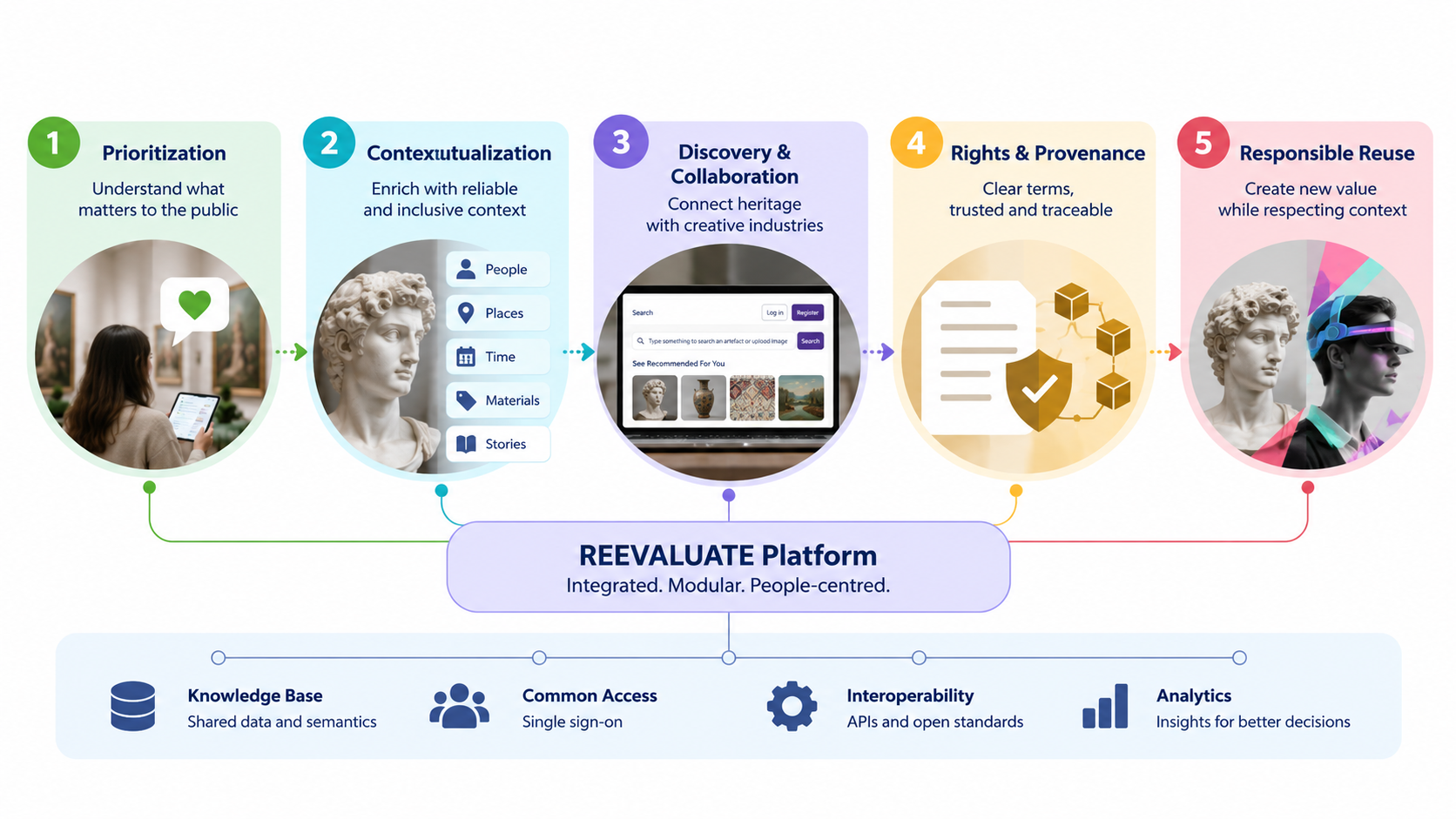
For REEVALUATE, such exchanges are particularly important. The project brings together technological development, cultural heritage expertise, public participation, contextualisation, validation, rights management and creative reuse within a shared framework. Dialogue with the wider European ecosystem helps ensure that these activities remain connected to emerging practices, infrastructures and institutional needs.
From individual tools to connected digital ecosystems
One of the central messages emerging from the forum was the need to move beyond isolated technological solutions.
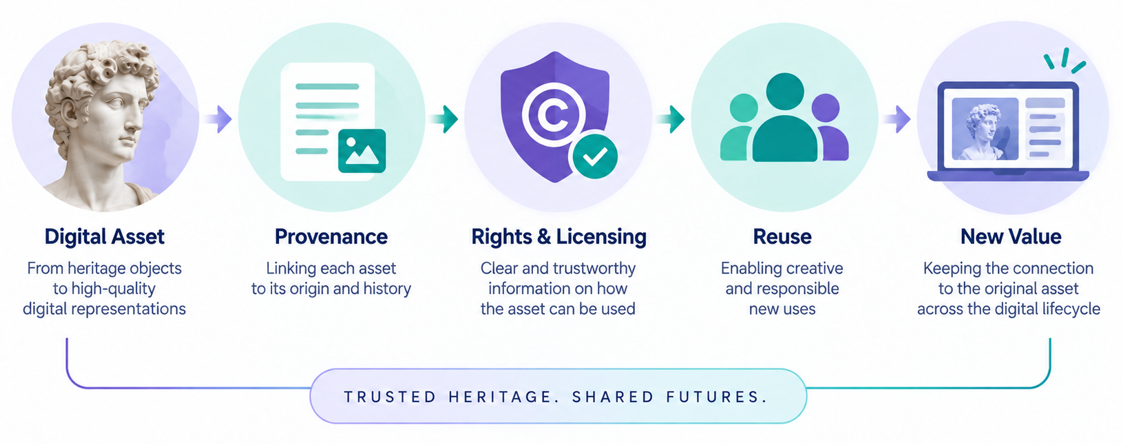
A 3D model, an immersive experience or an AI-supported service can provide significant value. However, its longer-term usefulness also depends on the wider environment in which it is created and managed. Digital assets need appropriate metadata, clear rights information, reliable storage, accessible interfaces and connections with other collections, platforms and infrastructures.
This means that the future of digital cultural heritage depends not only on technological innovation, but also on the development of collaborative ecosystems capable of supporting the complete life cycle of digital collections.
Such ecosystems must enable cultural heritage institutions to make informed decisions before digitisation, manage and enrich assets after they have been created, and support their responsible reuse in research, education, tourism and the cultural and creative industries.
This integrated perspective is closely aligned with REEVALUATE’s broader vision. The project is developing a framework for safer, more open, collaborative and inclusive cultural heritage digitisation and management, while examining how digital assets can be prioritised, contextualised, validated, protected and reused.
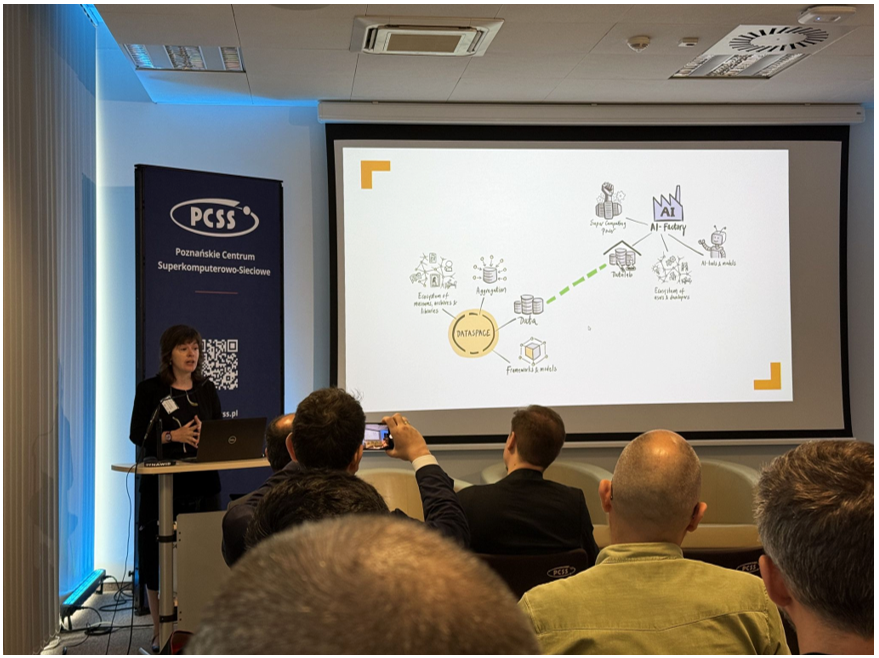
Strengthening cooperation across the European heritage community
Participation in the Poznań forum reinforced the importance of European cooperation in addressing the complex challenges surrounding cultural heritage digitisation.
No single institution, technology or project can respond to every technical, organisational, legal and societal issue involved. Progress depends on continued exchanges between cultural heritage institutions, researchers, technology providers, policymakers, creative professionals and European initiatives working across the sector.
By bringing together projects and organisations with complementary expertise, the forum provided a valuable setting for sharing practical experiences and identifying common priorities. It also demonstrated how European events can support connections between research results, institutional practices and the wider infrastructures being developed for digital cultural heritage.
REEVALUATE will continue contributing to this dialogue by sharing its results, strengthening synergies with related initiatives and supporting approaches that help cultural heritage institutions manage digital assets responsibly throughout their entire life cycle.
The REEVALUATE consortium thanks 3D Research for representing the project and curating its showcase at the forum.
REEVALUATE has received funding from the European Union’s Horizon Europe Research and Innovation Programme under Grant Agreement No. 101132389.