Five Ways Cultural Heritage Is Being Digitized in REEVALUATE
Digitizing cultural heritage can mean many different things.
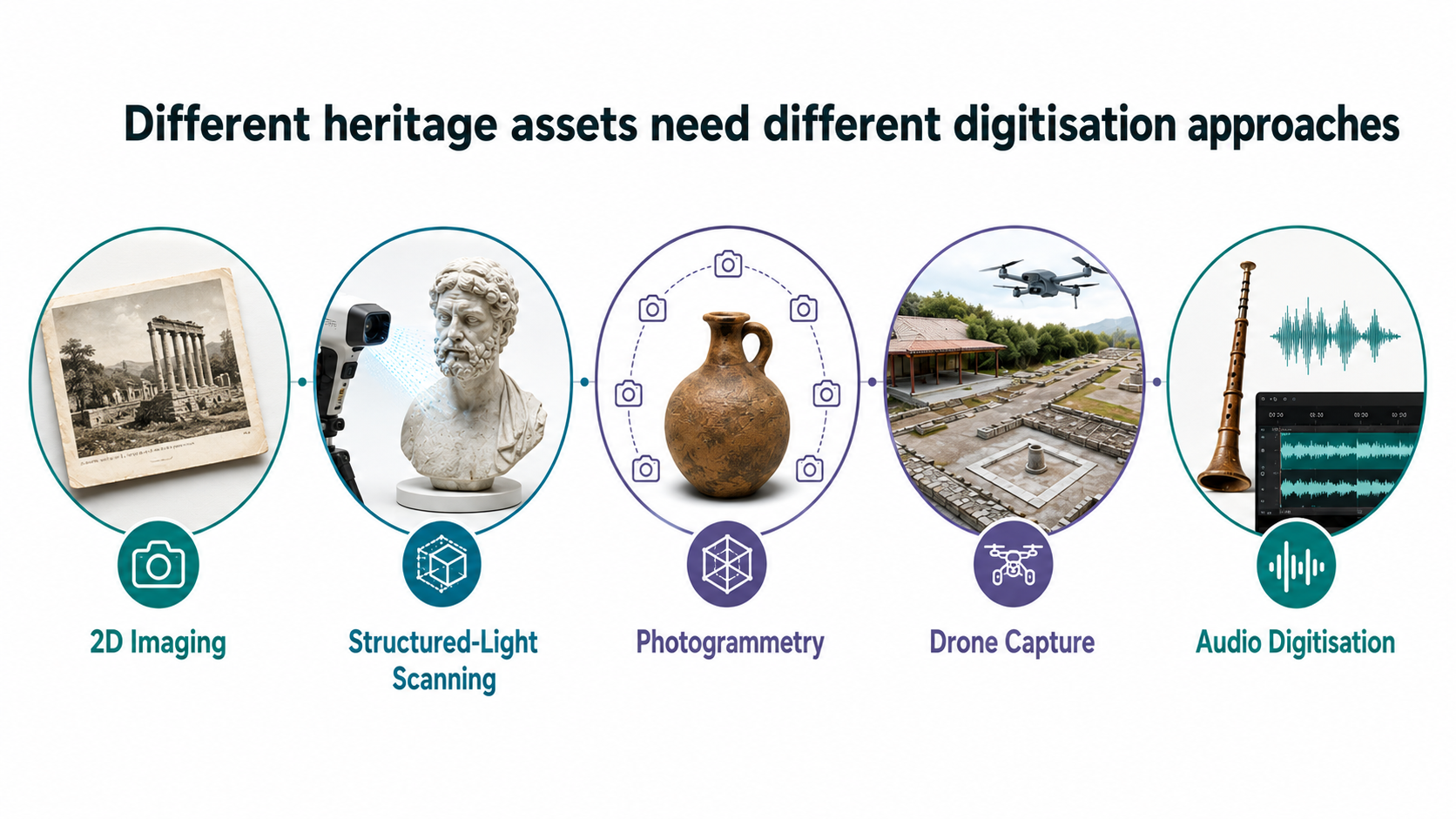
A museum medal, an archaeological site, a historical photograph and a century-old sound recording cannot all be captured in the same way. Different objects require different techniques, equipment and levels of detail, and the intended use of the digital result matters just as much as the object itself.
Across the REEVALUATE pilots, cultural heritage institutions and technical partners are working with different forms of digital capture, from high-resolution photography and 3D scanning to aerial surveys and historic audio.
Together, these examples illustrate an important principle: good digitization begins by choosing the method that fits the heritage asset and its future use.
1. High-resolution photography:
Photography is one of the most familiar forms of cultural heritage digitization, but professional heritage imaging is very different from simply taking a photograph.
A high-quality digital image should preserve as much reliable visual information as possible about an object. Color, scale, surface detail and perspective all matter, particularly when the image may later support documentation, research, publication or creative reuse.
Within REEVALUATE, photography forms part of the digitization work around objects such as those used in the Olympic Museum pilot (Pilot 2). Objects can also be documented photographically alongside other methods, allowing institutions to create both accessible 2D representations and richer digital resources for future applications.
The key point is that a photograph can serve different purposes. An image intended only as a small web preview does not have the same requirements as one intended for detailed study or as a source for subsequent digital processing.
Digitization should therefore begin with a question: what do we want people to be able to do with the digital object afterwards?
2. Structured-light scanning:
Some heritage objects need more than a flat image.
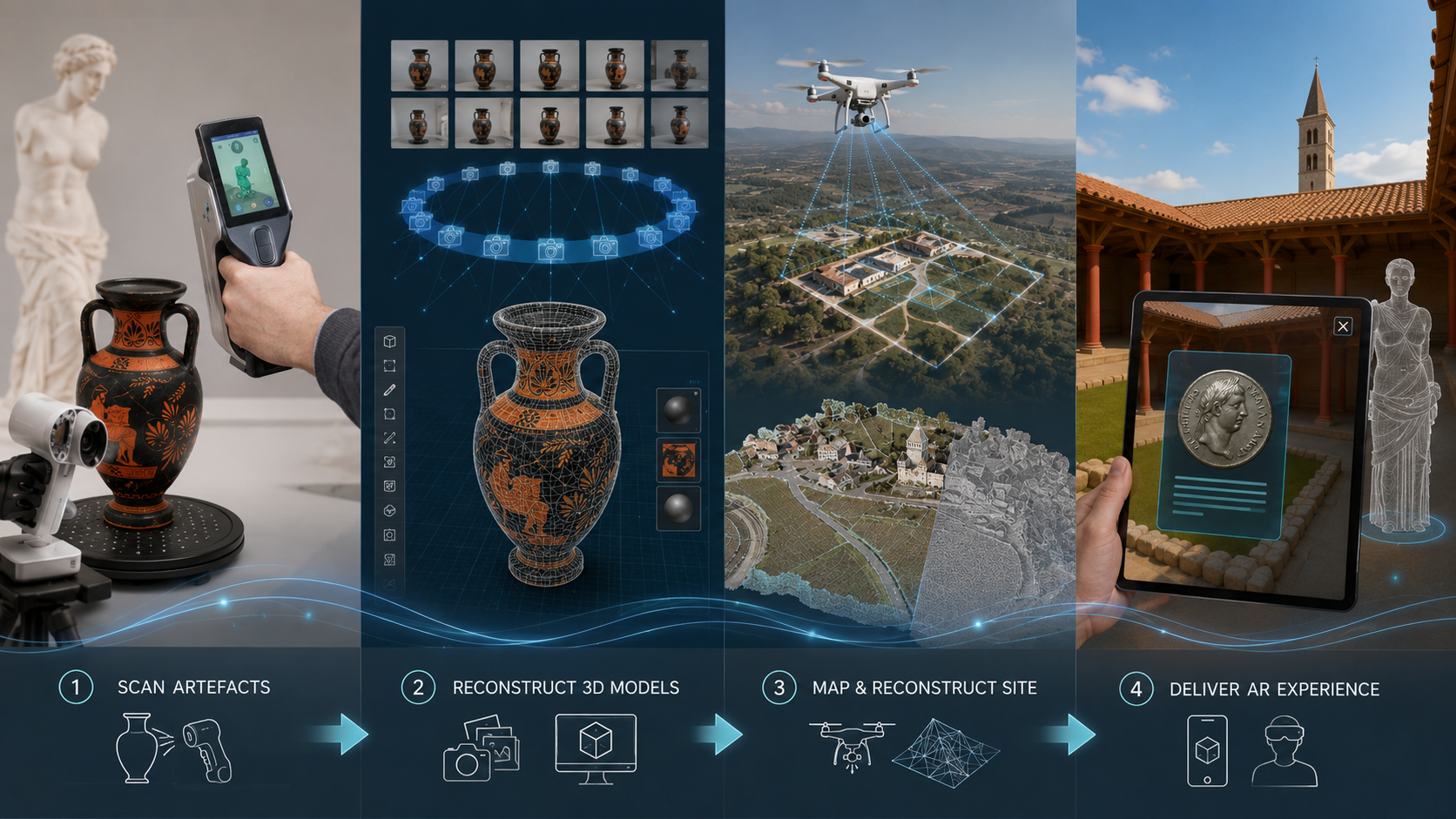
Structured-light scanning is one way of creating a detailed three-dimensional representation. A scanner projects controlled patterns of light onto the surface of an object and records how those patterns change across its shape. This information is then used to reconstruct its geometry digitally.
For cultural heritage, the method can be particularly useful for objects where form, volume and surface detail are important.
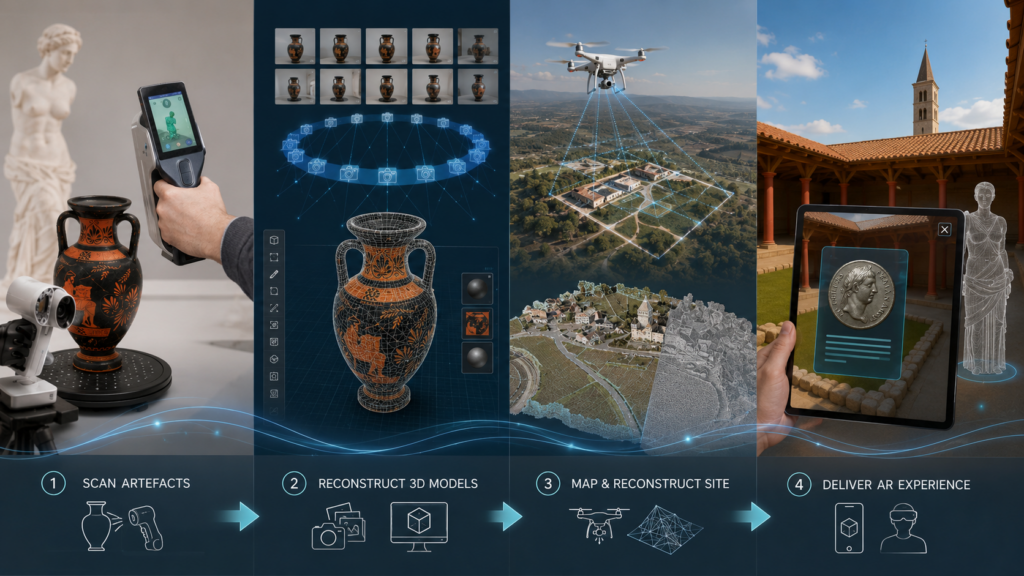
In the Aquileia pilot (Pilot 3), structured-light scanning is used alongside other techniques for individual archaeological objects. Medium-sized finds can be captured as detailed 3D geometry with texture information, creating digital objects suitable for further processing and online experiences.
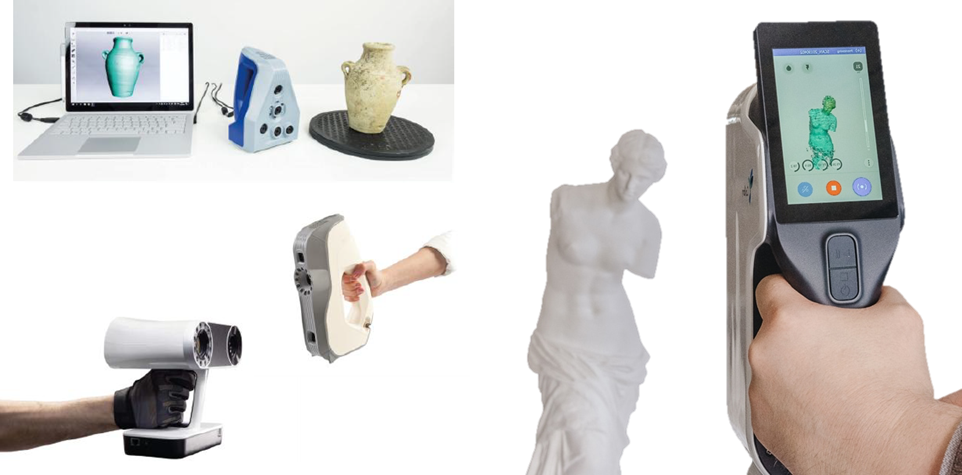
A 3D representation offers something a conventional photograph cannot: users can inspect an object from multiple viewpoints and better understand its physical form without handling the original.
This is important when an artefact is fragile, difficult to access or intended for use in virtual and interactive environments.
3. Photogrammetry:
Another route to three-dimensional digitization is photogrammetry.
Instead of directly measuring an object with a scanner, photogrammetry uses multiple overlapping photographs taken from different viewpoints. Software identifies common points across these images and uses them to reconstruct the shape of the object, structure or environment.
One of the strengths of photogrammetry is its flexibility. It can be applied to individual objects, architectural features and much larger cultural heritage environments.
REEVALUATE uses this approach in Aquileia. For the Domus of Titus Macer, photographs captured from different positions are combined to build a detailed digital representation of the archaeological site. Manual photography also helps cover areas and details that cannot be adequately captured from above.
Photogrammetry can also complement structured-light scanning. Different methods can therefore contribute to the same digital asset when the characteristics of the heritage object require it.
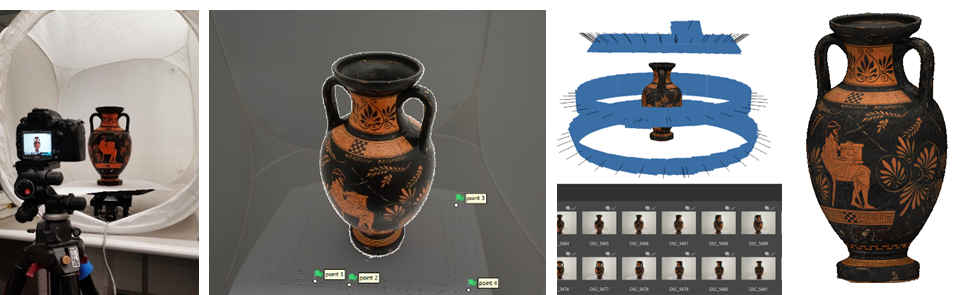
The lesson is important: digitization techniques do not always compete with one another. Often, the best result comes from combining them.
4. Drone capture:
What happens when the object being digitized is not something that fits inside a museum room, but an entire archaeological site? This is where aerial capture becomes valuable.
At the Domus of Titus Macer in Aquileia, drone photography contributes to the photogrammetric reconstruction of the archaeological area. Capturing the site from above provides viewpoints and spatial coverage that would be extremely difficult to achieve using ground photography alone.
The aerial images are then combined with photographs taken manually around the site. Together, these datasets contribute to a single detailed digital representation.
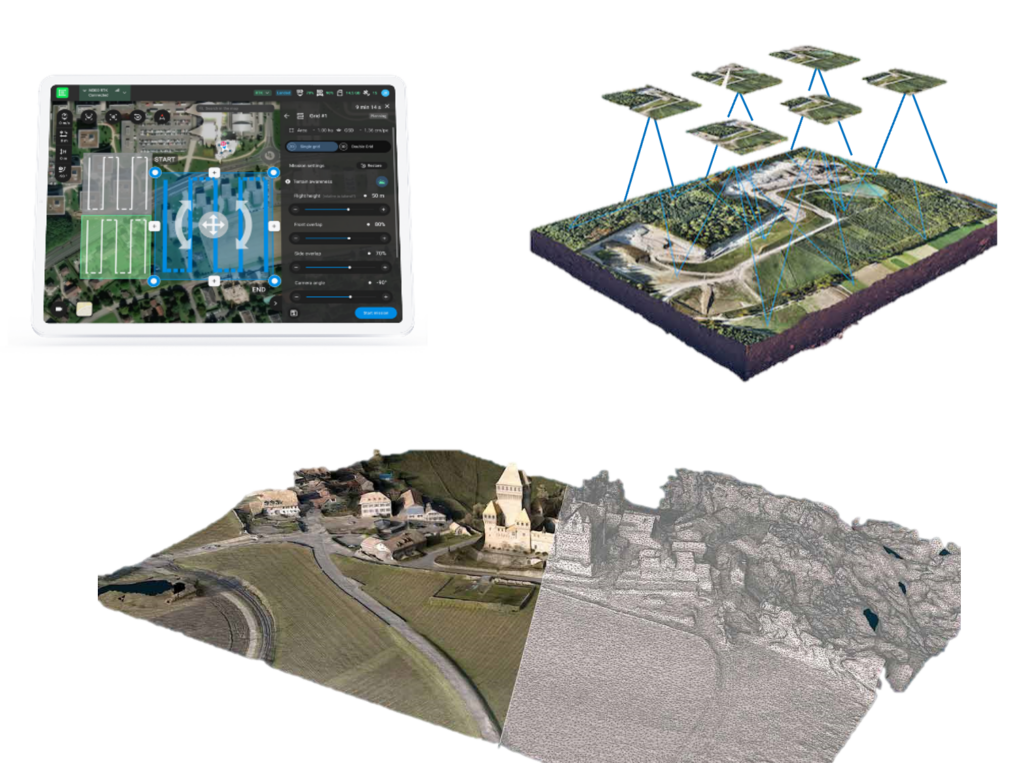
This demonstrates how the scale of a cultural heritage asset changes the digitization strategy.
A coin may require centimeter-level attention to its surface. An archaeological site requires understanding buildings, terrain and spatial relationships across a much larger area.
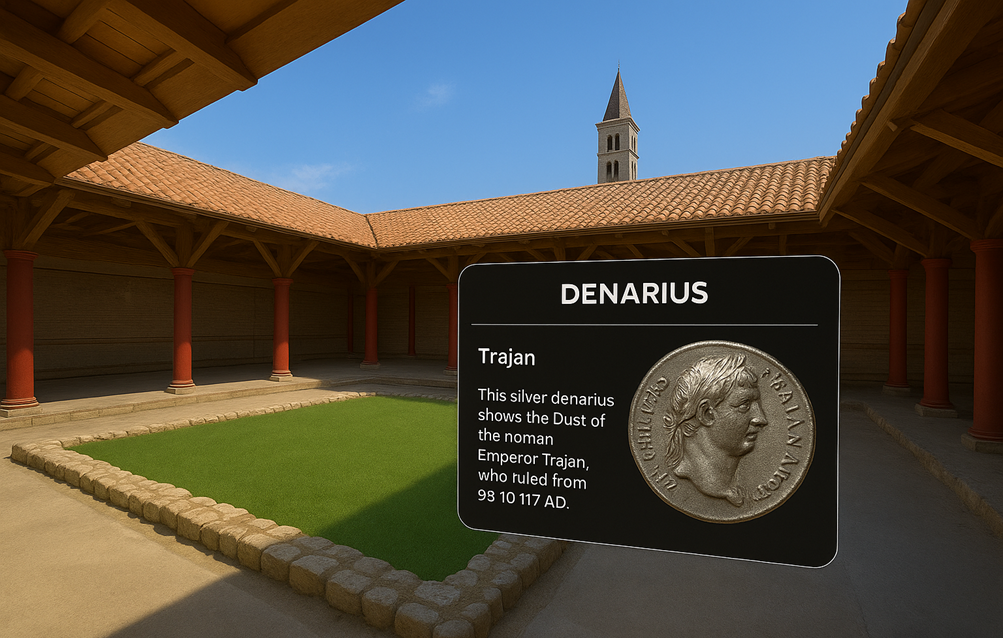
The digital result can then support experiences that go beyond documentation. In Aquileia, the digitized site material contributes to the virtual exploration of the Domus of Titus Macer, helping connect the physical archaeological area with an online experience.
5. Audio digitization:
Not every cultural heritage asset can be photographed or scanned. Sound is also part of cultural heritage.
Within REEVALUATE’s Pilot 2, historic recordings from the ethnomusicology collections of the Ethnologisches Museum in Berlin are being used alongside digitized material from the Olympic Museum of Thessaloniki.
Digitization allows historic recordings preserved on physical carriers to become digital audio assets that can be documented, accessed and ultimately reused in new cultural experiences.
This also demonstrates why cultural heritage digitization must be understood in a broad sense. The goal is not simply to create images or 3D models. Depending on the collection, a digital heritage asset might be an image, a 3D object, an audio recording, a textual resource or a combination of several media types.
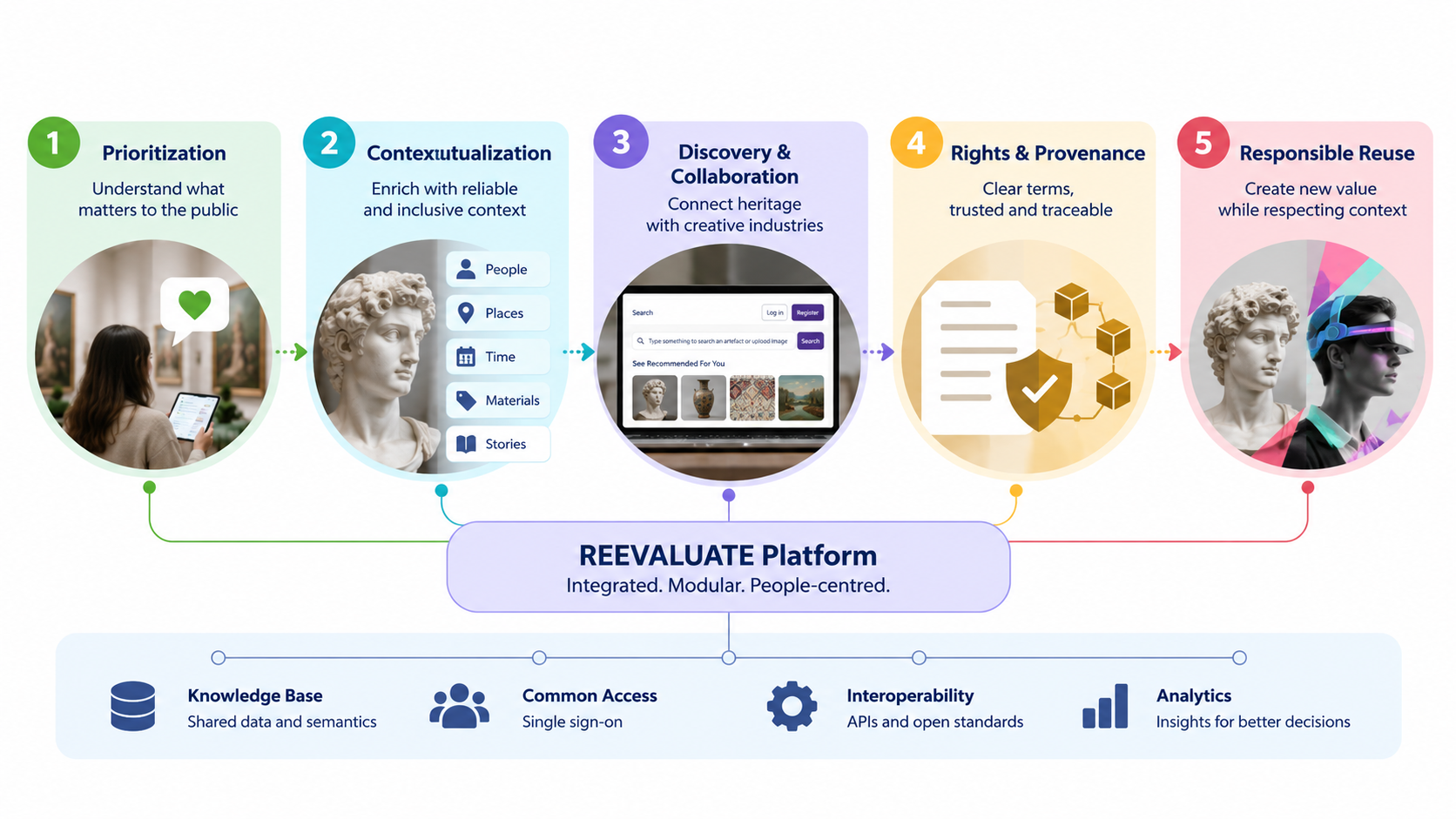
For REEVALUATE, these different forms of heritage can eventually enter the same wider lifecycle: they can be contextualized, managed, discovered and responsibly reused.
Choosing the method starts with the purpose
These five examples show that there is no universal digitization technique.
A useful starting point is to consider three things:
What is the heritage asset?
Its size, material, shape, condition and physical accessibility influence what can realistically be captured.
What information needs to be preserved?
For one object, color and surface detail may be essential. For another, precise three-dimensional geometry may matter more. For historic sound, the information exists in an entirely different medium.
What will the digital representation be used for?
Documentation, scientific research, online access, education, virtual tourism and creative reuse can all place different demands on the resulting digital asset.
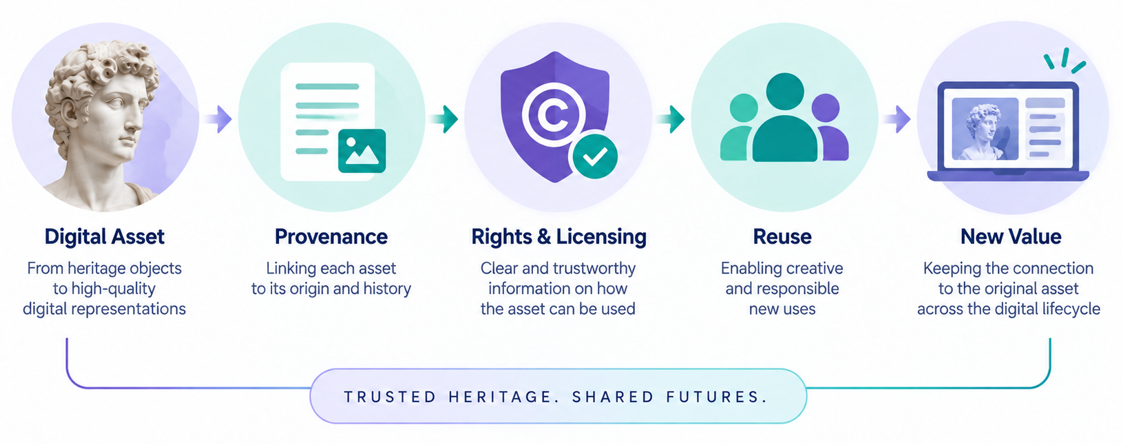
This is why REEVALUATE does not treat digitization as an isolated technical act. Creating the digital representation is part of a much wider process.
The resulting assets need context, rights information and provenance. They need to be discoverable and accessible. And, where appropriate, they should be capable of supporting new experiences and new forms of responsible reuse.
From capture to use
A 3D scanner, camera, drone or audio digitization system can create the digital representation. What happens next determines how valuable that representation becomes.
At Aquileia, digital capture contributes to the reconstruction and virtual exploration of an archaeological site. In Thessaloniki and Berlin, visual and audio heritage assets can become material for new museum and creative experiences.
The techniques may be different, but the objective is shared: to create digital cultural heritage assets that preserve important information and can continue to support access, understanding and reuse.
Digitization is therefore not about choosing the most advanced technology available.
It is about choosing the right way to capture the heritage asset, at the right level of quality, for a clearly understood purpose.
REEVALUATE has received funding from the European Union’s Horizon Europe Research and Innovation Programme under Grant Agreement No. 101132389.